How to Make a Balloon Rocket and Learn About Newton’s Laws
18 February 2026
Ever dreamed of launching your own rocket? 🚀 What if I told you that you can – from your living room, classroom or backyard, and without spending a dime on fuel? All you need are a few simple supplies, a curious mind, and a balloon. Yup, that’s right! Today we’re diving into the science fun zone by showing you how to make a balloon rocket and understand Newton’s Laws of Motion in the process.
This isn’t just a cool experiment – it’s a hands-on way to actually see physics in action. Whether you're a student, teacher, or just someone who loves a good DIY science experiment, you're in for a treat.
Let’s explore the how and why behind balloon rockets, and along the way, you’ll get a solid grip on one of the biggest names in science: Sir Isaac Newton.
🌬️ What Is a Balloon Rocket?
Before we get into Newton’s laws, let’s first understand what a balloon rocket actually is.A balloon rocket is essentially a balloon that moves forward when the air is released from it. You usually tape the balloon to a straw threaded through a string (which acts as the rocket's track), let go of the balloon, and watch it zoom across the room.
Sounds simple, right? That’s the beauty of it. What seems like a fun little race is actually science in motion. Literally.
🎈 Materials You’ll Need
Let’s start by gathering the supplies. Don’t worry — nothing fancy here. You probably already have these lying around your house or classroom.Here’s your checklist:
- 1 balloon (round or long – both work, but long balloons give better results)- 1 long piece of string (6-10 feet should do)
- 1 straw (a regular one is fine, but wider ones create less friction)
- Tape (scotch or masking tape works)
- Scissors
- Two objects to tie the string between (like chairs or doorknobs)
Optional: Stopwatch and ruler (if you want to turn it into a science experiment and measure results)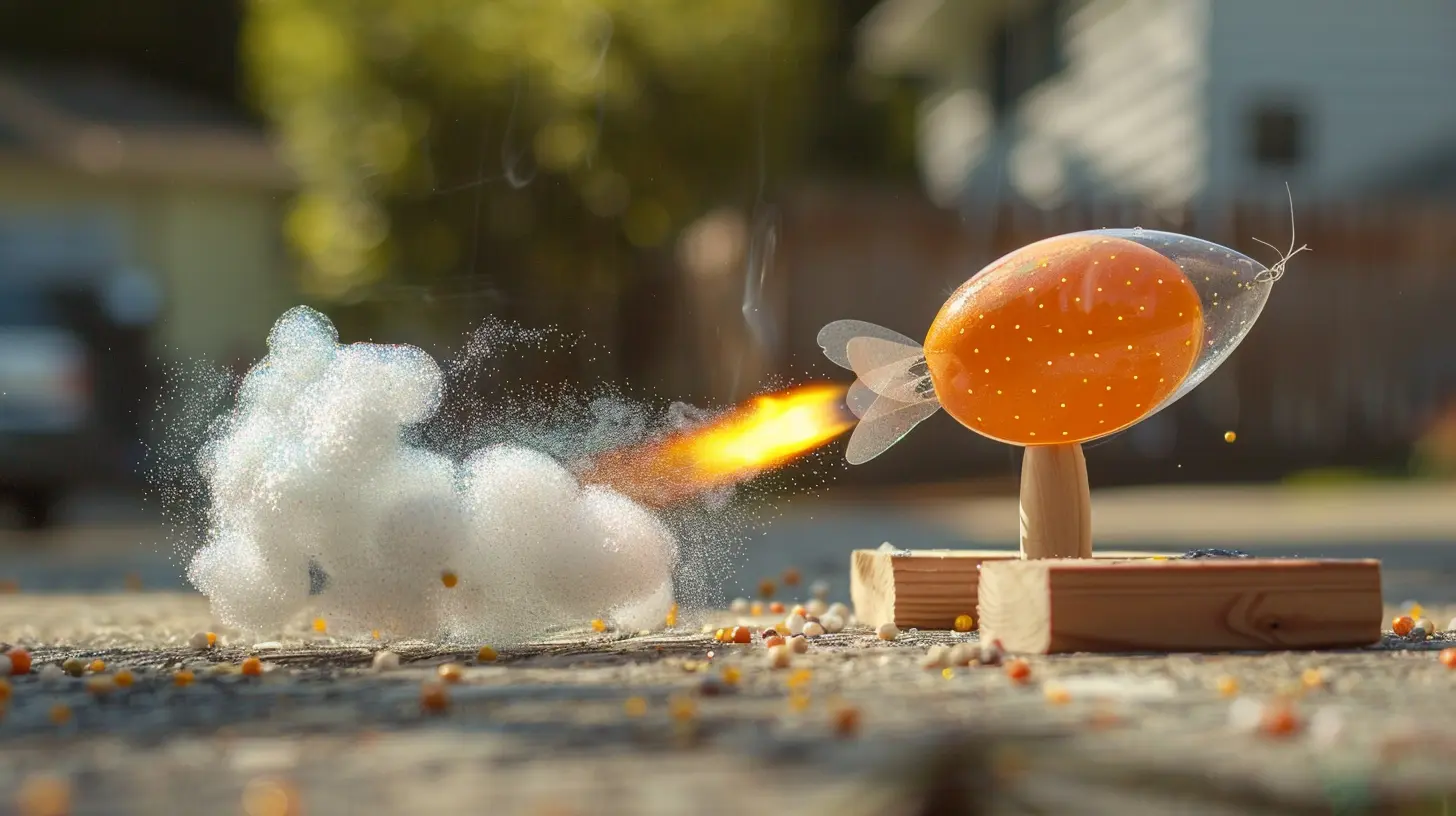
🛠️ Step-by-Step: How to Make Your Balloon Rocket
Alright, it's go-time! Let’s walk step-by-step through building your own balloon rocket.Step 1: Set Up the Launch Line
Tie one end of the string to a stationary object, like a chair or doorknob. Then thread the straw onto the string and tie the other end of the string to another object across the room. Make sure the string is pulled taut — not saggy.Step 2: Inflate the Balloon
Blow up your balloon but don’t tie the end. Instead, pinch it closed so the air doesn't escape. You can use a clip or your fingers.Step 3: Attach the Balloon to the Straw
Use tape to attach the balloon to the straw. Make sure the nozzle (the part where air comes out) is pointing backward — this is super important. The balloon should be parallel to the string.Step 4: Launch!
Let go of the balloon and watch it fly across the string. Zoom! That’s your balloon rocket in action.
💡 What's Happening Here?
So, you’ve built your rocket and seen it take off. Awesome!But why does it work? This is where Newton’s Laws of Motion come in. Your balloon rocket is the perfect way to see all three of them in real life. Let’s break it down together.
🔭 Newton’s First Law: The Law of Inertia
“An object at rest stays at rest, and an object in motion stays in motion unless acted upon by an unbalanced force.”Let’s start with the basics. Before you let go of the balloon, it's not moving, right? That’s inertia — things like to stay in their current state. But the moment you release it, the unbalanced force (the air rushing out) kicks things into gear.
The balloon starts to move because it’s no longer balanced; there's more force pushing it one way than the other. That’s inertia being overcome.
Think about it like a loaf of bread on a grocery cart at rest. The bread won’t go anywhere until you push the cart, which is exactly how your balloon needed air to start moving.
🚀 Newton’s Second Law: F = ma
“Force equals mass times acceleration.”This one sounds super science-y, but let’s break it down. What it really means is this: the bigger the force, the faster something goes — and the heavier it is, the harder you need to push it.
Your balloon has a certain mass (even though it’s light), and when the air rushes out, it creates a force. The result? Acceleration! That’s why your balloon shoots forward.
Now here’s the fun part: try the experiment again with different-sized balloons. You’ll notice that the bigger balloons (which hold more air) create a bigger force and fly faster or farther. That’s Newton's Second Law in action!
🧲 Newton’s Third Law: Action-Reaction
“For every action, there’s an equal and opposite reaction.”This one's the easiest to spot with your balloon. When you let go, air rushes out one way (the action), and the balloon moves in the opposite direction (the reaction).
Imagine jumping off a small boat onto a dock. As you leap forward, the boat moves backward. That’s the same idea. Balloon rockets are classic Newton’s Third Law in motion.
⚗️ Turn It Into a Science Experiment
Just doing the activity is cool, but why stop there? You can turn this into a full-blown science experiment. Here are some ideas to take things up a notch.🎯 Variables to Experiment With:
- Balloon size – Does a bigger balloon go farther?- String angle – What happens if your string isn’t perfectly horizontal?
- Type of string – Try yarn vs fishing line vs ribbon. How does friction affect motion?
- Number of balloons – What happens if you tape two balloons to the straw?
📊 Record Your Data:
Set up a table and measure how far and how fast your balloon travels with each change. This is a perfect hands-on opportunity to collect data, make a graph, and draw conclusions — just like real scientists do.👩🏫 Educational Applications
Teachers: this one's a gem 💎 for classroom learning.You’re not just teaching physics — you’re giving your students a memorable, visual way to completely understand motion and force. It fits beautifully into units on physical science, physics, forces, and energy.
Plus, the experiment includes:
- Observation skills
- Hypothesis testing
- Measuring and recording data
- Drawing scientific conclusions
You can even integrate math by calculating average speed, graphing results, or exploring ratios.
And the best part? It’s budget-friendly and engages even the least science-y student.
🧠 Real-Life Rocket Science (Kind Of!)
Okay, your balloon rocket may not end up on Mars, but real rockets work in a very similar way.Rockets lift off by pushing exhaust gases down (action), which propels them up (reaction). The main difference is that real rockets use fuel and advanced engineering to control that force — but the foundation? It’s Newton’s Third Law.
So when you see a SpaceX launch, just remember — your backyard balloon rocket is working on the same basic principle. Mind-blowing, right?
🛠️ Troubleshooting Tips: What If It Doesn’t Fly?
Don’t worry if your balloon rocket isn’t soaring on the first try. 🚫🛫Here are a few quick fixes:
- String sagging? Make sure it’s super tight.
- Balloon not taped well? It needs to be firmly attached to the straw — any wobble can throw it off.
- Balloon not straight? It should be aligned with the string track.
- Air leaking before you launch? Use a clip or make sure you’re pinching the balloon tightly.
🌟 Final Thoughts
Making a balloon rocket isn't just a fun afternoon project — it’s a gateway into the amazing world of physics. By creating this simple craft, you’re actually showing how the universe works. Newton’s Laws might sound like textbook jargon at first, but when you see them in action (in the form of a zooming balloon), they suddenly make a whole lot of sense.And who knows? Maybe this little balloon rocket launches more than just air — maybe it sparks a love for science that never stops soaring. 🚀
Grab a balloon, grab some string, and let your curiosity take off!
all images in this post were generated using AI tools
Category:
Science ExperimentsAuthor:

Fiona McFarlin
Discussion
rate this article
2 comments
Veda McGuire
Forget the fluff—building a balloon rocket is a hands-on blast that embodies Newton's Laws in action! Dive into this experiment, unleash your creativity, and watch science come alive. Embrace the mess and the magic—learning has never been this exhilarating!
March 5, 2026 at 5:03 AM
Fiona McFarlin
Absolutely! Building a balloon rocket is a fun and engaging way to see Newton's Laws in action. Let's get creative and make science come alive!
Summer Hensley
Blast off knowledge with every popping balloon!
February 18, 2026 at 4:18 AM
Fiona McFarlin
Thank you! It's a fun way to explore Newton's laws through hands-on learning!