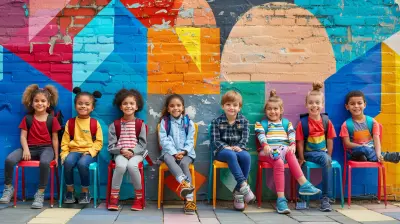
The Future of Positive School Culture in 2027
22 May 2026
Let me paint you a picture. It's 2027. You walk into a school, and the first thing you notice isn't the new technology or the fancy furniture. It's the feeling. The air hums with a quiet energy. Kids aren't just rushing to class-they're pausing to talk to teachers, laughing in the hallways, and hanging out in common spaces that feel more like a cozy coffee shop than an institution. You see a group of students huddled around a table, not on their phones, but actually debating something with a teacher who sits beside them, not above them.
This isn't a fantasy. This is the future of positive school culture, and it's already being built right now. But here's the thing: we've been talking about "school culture" for decades, and mostly it's been a buzzword that principals throw around in staff meetings. It meant "be nice to each other" or "hang up some motivational posters." That era is dying. By 2027, positive school culture won't be a soft, fluffy concept. It will be the hard, operational backbone of every successful school. And it will look nothing like what you expect.

The Death of "Nice" Culture
Let's get real for a second. For years, many schools chased a culture of surface-level niceness. You know the drill: "Be respectful, be responsible, be safe" plastered on every wall. Assemblies where everyone claps for the same three kids who always win. Teachers who smile while their stress levels hit the ceiling. That's not a positive culture. That's a performance.By 2027, we're going to see a massive shift away from this. Why? Because the kids coming up right now-Gen Alpha and the tail end of Gen Z-have zero tolerance for phoniness. They grew up online. They can smell a scripted interaction from a mile away. They don't want a culture that tells them to be "nice." They want a culture that is real, messy, and honest. A culture that acknowledges that some days suck, that conflict happens, and that you don't have to pretend everything is okay.
In 2027, a positive school culture will be defined by psychological safety, not politeness. It will be a place where a student can raise their hand and say, "I don't get this, and I'm frustrated," without feeling like they're admitting failure. It will be a place where a teacher can say, "I messed up that lesson, let's try again tomorrow," without fear of being judged by their peers or administrators. That's the real shift. We're moving from "be nice" to "be human."

The Teacher-Student Dynamic Gets a Radical Overhaul
Think about the traditional power structure in schools. The teacher stands at the front. The students sit in rows. Knowledge flows one way. That model is already cracking, but by 2027, it will be almost unrecognizable in schools with strong cultures.Here's what I mean. The best classrooms in 2027 won't have a "sage on the stage." They'll have a "guide on the side." Teachers will shift from being the sole source of information to being facilitators of curiosity. But more importantly, the relationship itself will change. We're talking about a genuine partnership between adults and kids. Not a friendship-let's not get weird. But a mutual respect where the teacher's authority comes from trust, not from a title.
I've seen this happening in pilot schools already. Teachers who say, "I don't know the answer to that, let's figure it out together." Teachers who ask students for feedback on their teaching style. Teachers who apologize when they're wrong. It sounds small, but it's revolutionary. In 2027, this will be the baseline. If a teacher can't build authentic, trusting relationships with students, they won't last. The culture will reject them.
And here's the kicker: this isn't just about being nice to kids. It's about effectiveness. When students feel genuinely seen and respected by their teachers, their brains light up differently. They take more risks. They ask harder questions. They care more about the work. The data on this is already overwhelming. By 2027, the schools that get this right will be the ones that outperform everyone else, not just in test scores, but in creativity, problem-solving, and long-term student success.

Technology as a Culture Builder, Not a Distraction
Let's talk about the elephant in the room: screens. Everyone is worried that technology is destroying school culture. And honestly, if we keep using it the way we have been, it will. But by 2027, the smartest schools will have figured out that technology is a tool, not a villain. The key is how you use it.Imagine this: instead of using apps to monitor students or track their every keystroke, schools will use technology to build community. Think about platforms that help students find study partners based on shared interests, not just who sits next to them. Tools that let teachers send quick, personalized check-ins to every student in their class. Systems that make it easy for students to give anonymous feedback about how they're feeling, so the school can spot a kid who's struggling before they spiral.
But here's the part that will surprise you. The most powerful technology for school culture in 2027 might be the one that gets used the least. The best schools will be intentional about creating "low-tech zones." Real, physical spaces where phones go in a locker, where conversation is the only activity. Cafeterias that are designed for eye contact, not scrolling. Hallways that are designed for bumping into people and having spontaneous chats. The schools that win the culture game will be the ones that use technology to enhance connection, not replace it.
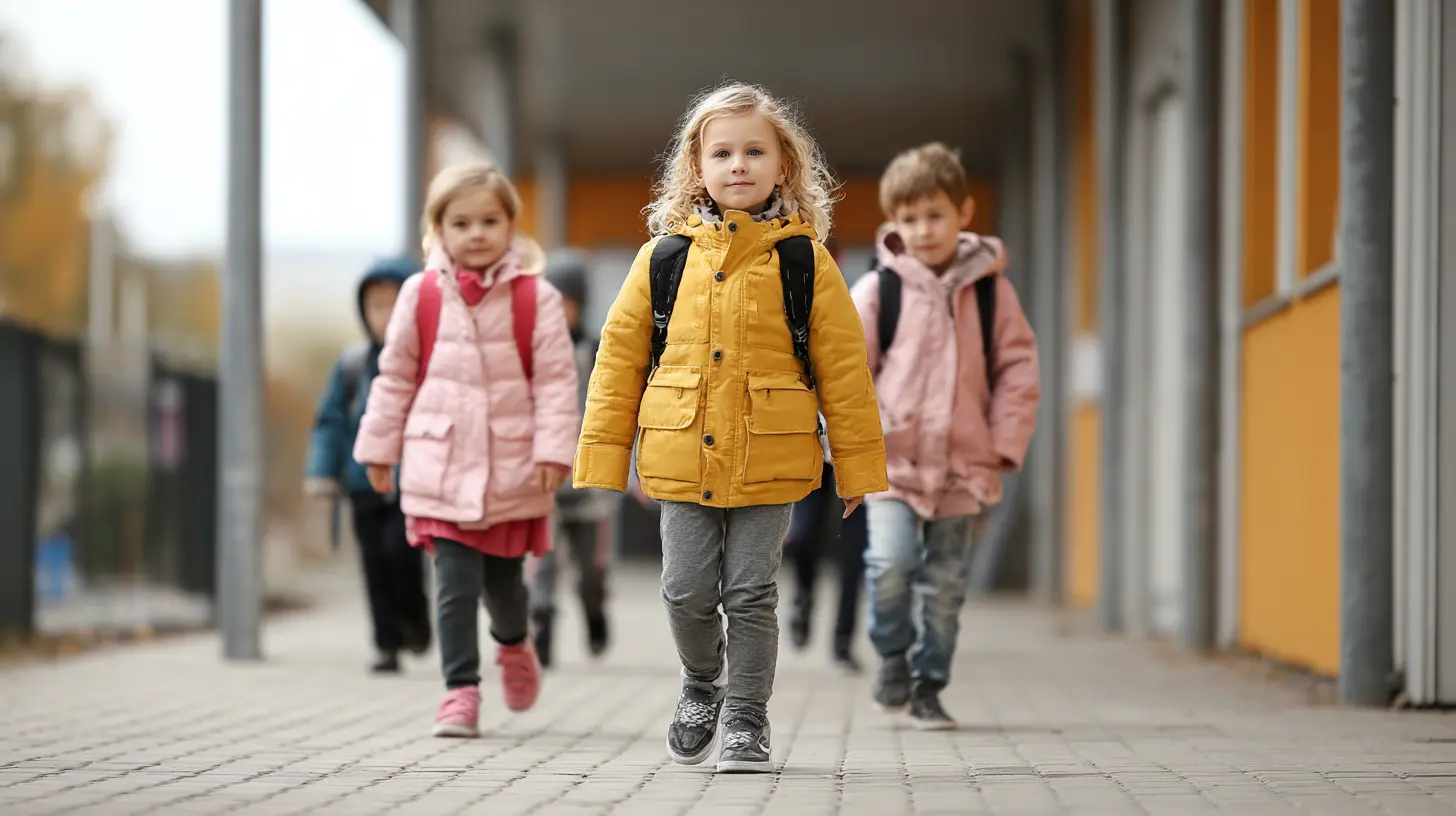
The Death of the "Siloed" School
One of the biggest problems with school culture right now is that it's often trapped inside the building. You have a great culture from 8 AM to 3 PM, and then it evaporates. The students go home to a completely different world. The parents are disconnected. The community doesn't know what's happening. That's not sustainable.By 2027, positive school culture will be porous. It will leak out into the community and let the community leak back in. This means schools will actively partner with local businesses, libraries, museums, and even other schools. It means parents won't just be invited to bake sales and parent-teacher conferences. They'll be co-creators of the culture. They'll have a real voice in decisions, not just a PTA that rubber-stamps whatever the principal wants.
I'm talking about things like "community learning days" where students spend time working on real projects with local organizations. Or "family feedback nights" where the school shares its culture data (yes, data) with parents and asks for honest input. When a school's culture extends beyond its walls, it becomes resilient. It can't be destroyed by a single bad year or a change in leadership. It becomes a living thing that the whole community owns.
The Role of Leadership (It's Not What You Think)
We tend to think of school culture as something the principal creates. They set the vision. They push the mission. They lead the charge. By 2027, that model will be seen as outdated and fragile. Why? Because when the principal leaves, the culture often dies with them.The future of positive school culture is distributed leadership. It's not about one charismatic leader at the top. It's about a network of people who all feel ownership over the culture. Teachers who lead culture initiatives. Students who run restorative justice circles. Custodians who are treated as essential members of the community. Parents who organize events that aren't just fundraisers but real community builders.
In 2027, the best principals will be the ones who make themselves irrelevant. Not in a bad way. They'll build systems and empower people so that the culture runs on its own. They'll be the gardeners, not the architects. Their job is to water the soil, pull out the weeds, and let the garden grow itself.
This is hard. It requires letting go of control. But the schools that do it will have a culture that survives anything. A principal retires? The culture stays. A pandemic hits? The culture adapts. A budget crisis? The community rallies. That's the power of distributed ownership.
Restorative Practices Go Mainstream
Let's talk about discipline. Because nothing kills a school culture faster than a punitive, zero-tolerance approach. We've known this for years. Suspensions don't work. They push kids out. They create resentment. They destroy trust. And yet, most schools still rely on them.By 2027, this will change. Not because everyone suddenly becomes a progressive educator, but because the data will be impossible to ignore. Schools that use restorative practices-circles, mediation, accountability without punishment-will have better attendance, lower dropout rates, and happier students. And in an era where schools are competing for enrollment (yes, that's happening), happy students mean more families choose your school.
Restorative culture isn't soft. It's actually harder than suspending a kid. It requires sitting in a circle and talking through the harm. It requires the offender to actually understand the impact of their actions. It requires the victim to have a voice. It takes time. It takes emotional labor. But the payoff is a culture where conflicts become learning opportunities, not wounds that fester.
In 2027, a student who makes a mistake won't be labeled a "bad kid." They'll be asked, "What happened? Who was affected? What do you need to do to make it right?" That's not just discipline. That's teaching humanity.
The Measurement of Culture (Yes, We'll Measure It)
Here's something that might sound cold, but stick with me. By 2027, positive school culture won't just be something you feel. It will be something you measure. And I don't mean a once-a-year survey where kids circle smiley faces.I'm talking about real-time, anonymous pulse checks. Weekly questions like "Did you feel safe at school today?" or "Is there an adult you trust here?" Data that gets analyzed by AI to spot trends before they become problems. Dashboards that show administrators where the culture is thriving and where it's fraying.
But here's the catch. The measurement has to be used for growth, not for punishment. If a teacher sees that their classroom culture scores are low, the response shouldn't be a reprimand. It should be support. Coaching. Resources. The schools that get this right will treat culture data like a patient's vital signs-something to monitor and respond to, not a grade to assign.
This might sound scary to some educators. "We're going to quantify human connection?" But the alternative is worse. Right now, too many schools ignore culture until it's broken. By the time you notice the toxicity, it's already done damage. Measurement allows you to intervene early. To catch a kid who's falling through the cracks. To support a teacher who's burning out. It's not about surveillance. It's about care.
The Physical Space Revolution
We can't talk about 2027 without talking about the actual buildings. Most schools were designed in the 1950s or 1970s. Long hallways. Rows of desks. Fluorescent lights. A cafeteria that feels like a prison. That architecture screams "compliance," not "community."The future of positive school culture demands a redesign. Not necessarily a costly renovation, but a reimagining of how space is used. By 2027, schools with strong cultures will have flexible furniture that can be rearranged in minutes. They'll have "third spaces"-areas that aren't classrooms and aren't hallways, but cozy nooks for conversation, reading, or just decompressing. They'll have walls that are covered in student work, not just motivational posters from a catalog.
And here's the wild part: some of the best culture-building spaces won't be inside at all. Outdoor classrooms, gardens, and even simple benches under a tree will become essential. The physical environment is a silent teacher. It tells students, "You belong here," or "You're just passing through." In 2027, the best schools will design every square foot with intention.
The Emotional Literacy Revolution
We tell kids to "use your words," but we rarely teach them how. By 2027, emotional literacy will be as fundamental as reading and math in schools with positive culture. This isn't just about "social-emotional learning" as a separate subject. It's about weaving it into everything.Imagine a math class where the teacher checks in on how students are feeling before a test. A history class where students discuss the emotions behind historical events. A science lab where collaboration skills are taught explicitly. This is already happening in pockets, but by 2027, it will be the norm.
Why? Because the world outside school is demanding it. Employers want people who can collaborate, manage conflict, and understand their own emotions. Colleges want students who are resilient, not just high-scoring. And most importantly, students themselves are crying out for it. The mental health crisis among young people is real. A positive school culture that doesn't address emotional health is like a hospital that doesn't treat infections.
The Hard Truth: It's Not Easy
I want to be honest with you. Everything I've described sounds amazing, but it's also incredibly hard. Changing school culture is like turning a cruise ship. It takes time, money, and relentless effort. There will be resistance. Teachers who say, "We don't have time for this." Parents who say, "Just focus on academics." Administrators who get fired before they see the results.But here's the thing that keeps me optimistic. The schools that do this work-the ones that build real, positive culture-they don't go back. Once you've experienced a school where kids feel safe, where teachers feel valued, where conflict is handled with compassion, you can't unsee it. You can't settle for the old way.
So what does this mean for you, right now, in 2025 or 2026? It means you can start. You don't have to wait for 2027. You can ask one student how they're really doing. You can apologize to a class when you mess up. You can sit in a circle instead of rows. You can measure one small thing about your culture and respond to it.
The future of positive school culture isn't a destination. It's a direction. And the schools that start moving now will be the ones that thrive in 2027. The rest will be playing catch-up, wondering why their students are disengaged and their teachers are burned out.
The choice is ours. Let's build something real.
all images in this post were generated using AI tools
Category:
School CultureAuthor:

Fiona McFarlin
Discussion
rate this article
2 comments
Ryan McGrath
This article highlights essential trends for nurturing positive school culture. Emphasizing collaboration and mental health resources will be crucial. I look forward to seeing how schools adapt and innovate in the coming years.
July 22, 2026 at 11:42 AM
Fiona McFarlin
Thanks for your insights! Collaboration and mental health are key. Excited to see how schools evolve by 2027.
Craig Valentine
As we look to 2027, fostering a positive school culture requires more than policies; it demands genuine connections among students, educators, and families. Emphasizing empathy and inclusivity can transform learning environments, making them not just places of education but communities where every voice matters and growth is collective.
May 23, 2026 at 12:57 PM