How Artificial Intelligence Will Transform Online Degrees by 2026
30 April 2026
Let’s be real for a second: online degrees have always carried a bit of a stigma. You know the one—the "is it as good as the real thing?" question that lingers in hiring managers’ minds. But by 2026, that question won’t just be outdated; it’ll be laughable. Why? Because Artificial Intelligence isn’t just knocking on the door of higher education—it’s about to kick it down, remodel the entire house, and hand you the keys to a learning experience that’s faster, smarter, and more personalized than anything a traditional lecture hall could ever offer.
I’m not here to sugarcoat it. The shift is coming, and it’s coming fast. If you’re a student, an educator, or just someone curious about the future of learning, buckle up. By 2026, AI won’t just assist online degrees—it will fundamentally transform them. Let’s dive into how this will happen, why it matters, and what you can expect.
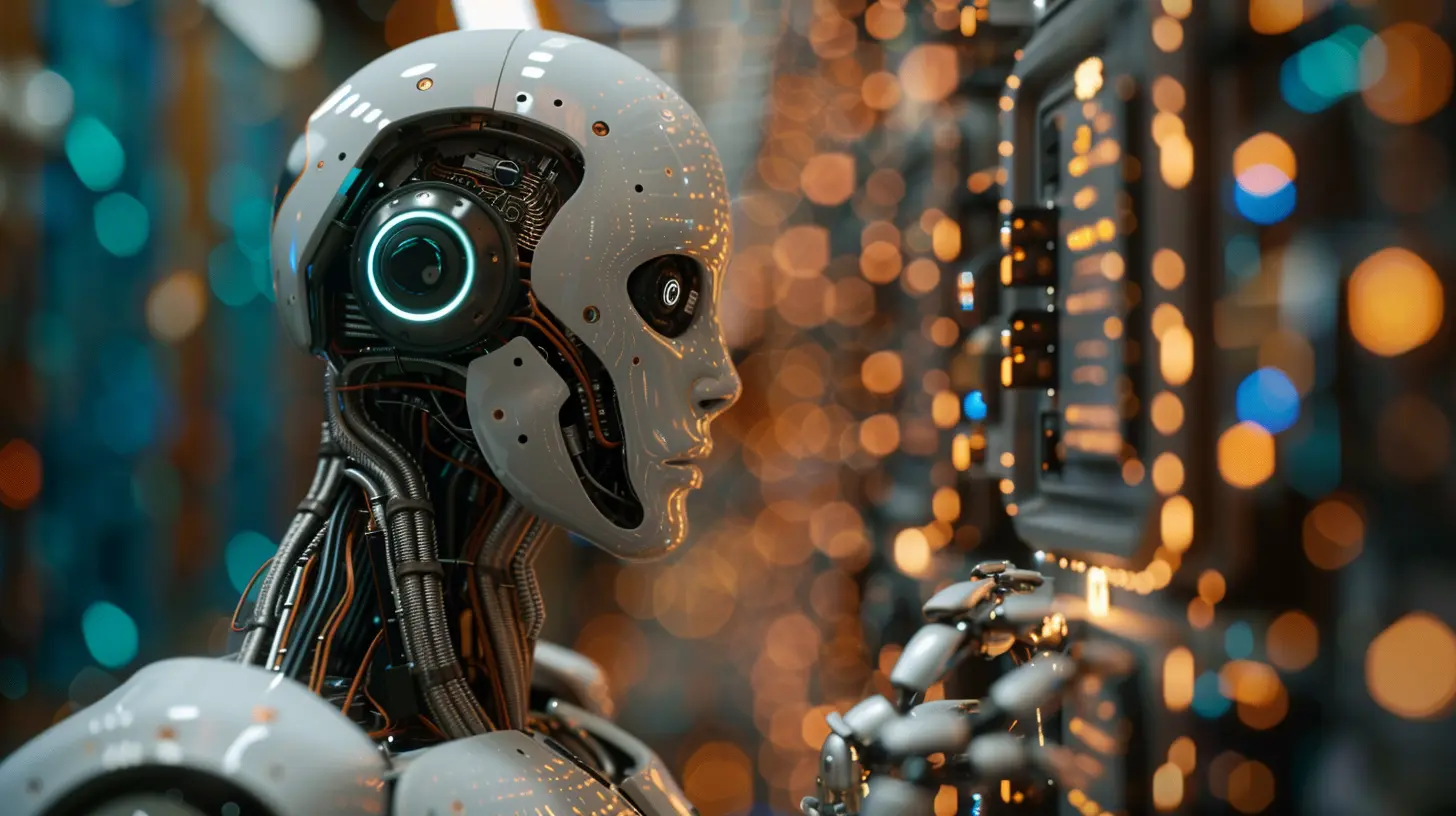
The Death of the One-Size-Fits-All Curriculum
Think back to your last online course. Chances are, you sat through hours of pre-recorded lectures, completed a cookie-cutter quiz, and submitted a paper that felt more like a checkbox than a learning experience. Sound familiar? That’s because most online degrees today are still built on a factory model: same content, same pace, same assessment for everyone.But here’s the thing: you are not everyone. You learn differently. Some of you devour text, others need visuals, and a few of you thrive on hands-on simulations. By 2026, AI will make the "one-size-fits-all" curriculum as extinct as the dial-up modem.
How AI Personalizes Learning Paths in Real Time
Imagine enrolling in an online degree program where, on day one, an AI assistant analyzes your learning style, your prior knowledge, and even your emotional engagement. It doesn’t just push you through a syllabus—it dynamically adjusts. If you’re breezing through calculus, the AI accelerates your pace and throws in advanced challenges. If you’re struggling with Python, it slows down, offers extra resources, and even changes the teaching method—maybe switching from text-based tutorials to interactive coding labs.This isn’t science fiction. Platforms like Khan Academy already use basic AI to suggest content. But by 2026, this will be the norm for full degree programs. Think of it like a personal tutor who never sleeps, never judges, and never gets bored of your questions. It’s the difference between a buffet where you have to eat everything and a chef who customizes every dish to your taste.

AI-Powered Assessment: Goodbye, Multiple Choice; Hello, Real-World Simulation
Let’s talk about the elephant in the room: exams. Right now, most online degrees rely on quizzes, essays, and proctored tests. But let’s be honest—do multiple-choice questions really prove you understand the material? Or do they just prove you’re good at memorizing?By 2026, AI will redefine assessment entirely. Instead of asking you to regurgitate facts, your degree program will throw you into realistic, AI-generated simulations. Studying business? Your final exam might be an AI-driven market simulation where you have to pivot your strategy as virtual competitors change prices. Studying healthcare? You’ll diagnose patients in a virtual clinic powered by natural language processing (NLP) that responds to your questions in real time.
Why This Changes Everything for Employers
Employers have long complained that graduates lack practical skills. AI-driven assessment closes that gap. When you complete a simulation, the AI doesn’t just mark you right or wrong—it analyzes your decision-making process, your speed, your creativity, and your ability to adapt. You walk away with a portfolio of "proof of skill," not just a transcript. It’s like the difference between reading a recipe book and actually cooking a five-course meal under pressure.
24/7 AI Mentors: The End of Lonely Learning
One of the biggest complaints about online degrees is the isolation. You’re staring at a screen, watching a lecture, and you have a question—but the professor won’t reply until tomorrow, and the discussion forum is a ghost town. It’s lonely, right?By 2026, that loneliness will be a thing of the past. Every online degree student will have an AI mentor—a conversational agent that’s always available. Need help with a concept at 2 AM? Your AI mentor explains it in three different ways until it clicks. Stuck on a research paper? It suggests sources, helps you structure arguments, and even checks for logical fallacies.
But Isn’t That Just Cheating?
Hold on—I can hear the skeptics already. "Won’t AI just do the work for students?" That’s a fair question, but it misses the point. The best AI mentors don’t give you answers; they guide you to find them yourself. It’s the difference between a friend who hands you the solution to a puzzle and a friend who points out the clues so you can solve it yourself. By 2026, ethical AI systems will be designed to scaffold your learning, not replace it. They’ll track your progress, identify gaps, and push you to think critically—without spoon-feeding you.
The End of the "Degree as a Ticket" Model
Let’s zoom out for a second. For decades, a degree was a ticket to a job. You paid for it, you earned it, and you hoped it opened doors. But the ticket model is broken. Degrees are expensive, slow to update, and often irrelevant by the time you graduate.AI will flip this script. By 2026, online degrees will become modular and stackable. Instead of committing to a full four-year program, you’ll take micro-credentials that AI helps you assemble into a degree. Think of it like building a playlist instead of buying an entire album. You want a data science degree? The AI recommends a sequence of courses, projects, and certifications based on your career goals and current market demands.
Real-Time Curriculum Updates
Here’s the kicker: AI won’t just help you choose courses—it will help universities update them. Right now, curriculums are frozen for years. By 2026, AI algorithms will scan industry trends, job postings, and technological breakthroughs, then automatically suggest updates to course content. If blockchain skills suddenly spike in demand, your degree program will adjust within weeks, not years. Your online degree will be a living document, constantly refreshed to keep you ahead of the curve. It’s like having a GPS that recalculates your route in real time when traffic hits.The Role of Generative AI in Course Creation
Let’s talk about the instructors. I’m not saying professors will be replaced—far from it. But by 2026, generative AI will become their most powerful tool. Imagine a professor who wants to create a course on climate policy. Instead of spending months writing lectures, they’ll use AI to generate initial drafts, case studies, and even interactive dialogues. They’ll then refine, personalize, and inject their expertise.This means courses will be richer, more diverse, and more current. AI can pull in real-world data, recent news, and even simulate debates between historical figures. It’s like having a team of research assistants working 24/7 to keep your education fresh.
But Will It Replace Human Teachers?
No. And that’s the point. AI will handle the grunt work—grading, content generation, scheduling—so professors can focus on what they do best: mentoring, inspiring, and challenging students. The human touch becomes more valuable, not less. Think of it like a chef using a food processor. The machine does the chopping, but the chef still creates the masterpiece.
Accessibility and Equity: AI as the Great Equalizer
Here’s a bold prediction: by 2026, AI will make online degrees more accessible than ever—and that’s not just marketing fluff. Right now, online degrees still have barriers: language, disability, internet connectivity, and cost. AI is already chipping away at these.Breaking Language Barriers
AI-powered translation tools will enable students to take courses in their native language while the instructor speaks another. Real-time captioning, voice-to-text, and even tone modulation will make content accessible for students with hearing or visual impairments. And AI-driven bandwidth optimization will allow students in low-connectivity areas to stream high-quality content without buffering.Cost Reduction Through Automation
Let’s talk money. Universities spend a fortune on administration, grading, and curriculum development. AI will automate much of this, slashing overhead costs. By 2026, I predict we’ll see online degrees priced at a fraction of today’s rates—some even free, subsidized by AI-driven efficiency. The result? A degree that’s accessible to anyone with an internet connection, regardless of their bank account.Ethical Challenges We Can’t Ignore
Now, I’d be lying if I said this transformation will be all sunshine and rainbows. There are real risks. AI systems can inherit bias from their training data. If an AI mentor is trained on predominantly Western, male, or privileged perspectives, it could reinforce inequalities. Universities must audit their AI tools relentlessly.Data Privacy and Surveillance
Another concern: how much data will your AI mentor collect? Every click, every hesitation, every wrong answer. By 2026, we’ll need clear regulations to ensure this data isn’t used to penalize students, sell to advertisers, or discriminate in hiring. The line between personalized learning and surveillance is thin—and we need to walk it carefully.The Risk of Over-Reliance
Finally, there’s the human factor. If AI does too much, students might stop developing critical thinking skills. The key is balance. AI should be a tool, not a crutch. By 2026, the best programs will teach students how to use AI ethically, not just rely on it.
What This Means for You Right Now
So, where does this leave you? If you’re currently considering an online degree, don’t wait until 2026 to start. But do ask the right questions: Does the program use adaptive learning? Are there AI mentors or tutoring systems? Does the curriculum update regularly? The universities that invest in AI now will be the ones that deliver the best outcomes later.For educators, the message is clear: embrace AI or get left behind. Start experimenting with generative AI for course design, use analytics to identify struggling students, and rethink assessment models.
For employers, start looking at candidates differently. By 2026, a degree from an AI-enhanced program might matter more than the university’s name. Skills, adaptability, and real-world simulation results will speak louder than a diploma from an Ivy League school.
The Big Picture: A New Era of Learning
Think about it this way: the traditional education model was built for the industrial age—batch processing, standardization, and compliance. AI is ushering in the intelligence age of education: personalized, dynamic, and human-centered. By 2026, online degrees won’t just be "as good as" traditional ones. They’ll be better. Faster. Cheaper. More relevant.Will it be perfect? No. There will be glitches, ethical debates, and growing pains. But the direction is unstoppable. If you’re ready to stop treating education as a one-time transaction and start seeing it as a lifelong, AI-enhanced journey, then 2026 is going to be your year.
So, are you ready to transform how you learn? Because AI is ready for you.
all images in this post were generated using AI tools
Category:
Online DegreesAuthor:

Fiona McFarlin
Discussion
rate this article
2 comments
Lila Matthews
This article highlights the exciting potential of AI in online education. It's crucial to stay informed and adapt to these changes to enhance learning experiences for students.
May 18, 2026 at 3:05 AM
Sylas Malone
This article highlights how AI will personalize learning experiences and streamline administrative tasks in online degree programs. By 2026, we can expect enhanced student engagement through adaptive technologies, making education more accessible and tailored to individual needs than ever before.
May 6, 2026 at 3:34 AM
Fiona McFarlin
Thanks for your thoughts! The potential of AI in education is exciting, and I believe it will truly reshape student experiences in meaningful ways.