Will Online Degrees Be the New Normal in Academia by 2027?
18 May 2026
Let's be honest for a second. If someone had told you back in 2019 that within a year, millions of students would be attending classes from their kitchen tables, you would have laughed. You would have said, "No way. College is about lecture halls, dorm rooms, and coffee-stained library books." Then 2020 hit, and everything flipped. Suddenly, "Zoom University" became a real thing. Now, here we are, a few years later, and the question isn't if online degrees will stick around. The question is: will they become the default? Will online degrees be the new normal in academia by 2027?
That is a big, scary, and exciting question. And the answer is not a simple yes or no. It is a "kind of, but not like you think." Let's dig into the dirt of this idea and see what is really growing under the surface.

The Elephant in the Lecture Hall: Why This Question Even Exists
First, let's address the giant, sweatpants-wearing elephant in the room. Why are we even talking about this? Because the old system is cracking. Traditional college is becoming a luxury item that fewer people can afford. Tuition is skyrocketing. Student loan debt is a national nightmare. And the promise of a "good job" after four years of sitting in a wooden chair? That promise is looking a little shaky.At the same time, technology has gotten good. Not just "good enough," but genuinely good. A decade ago, online learning meant watching a grainy video and posting on a forum that looked like it was built in 1998. Now? You have AI tutors, virtual labs, real-time collaboration tools, and degrees from top universities that live entirely on your laptop.
So, the pressure is on. Academia is being squeezed by economics on one side and technology on the other. Something has to give. And that something is the rigid, four-year, in-person model.
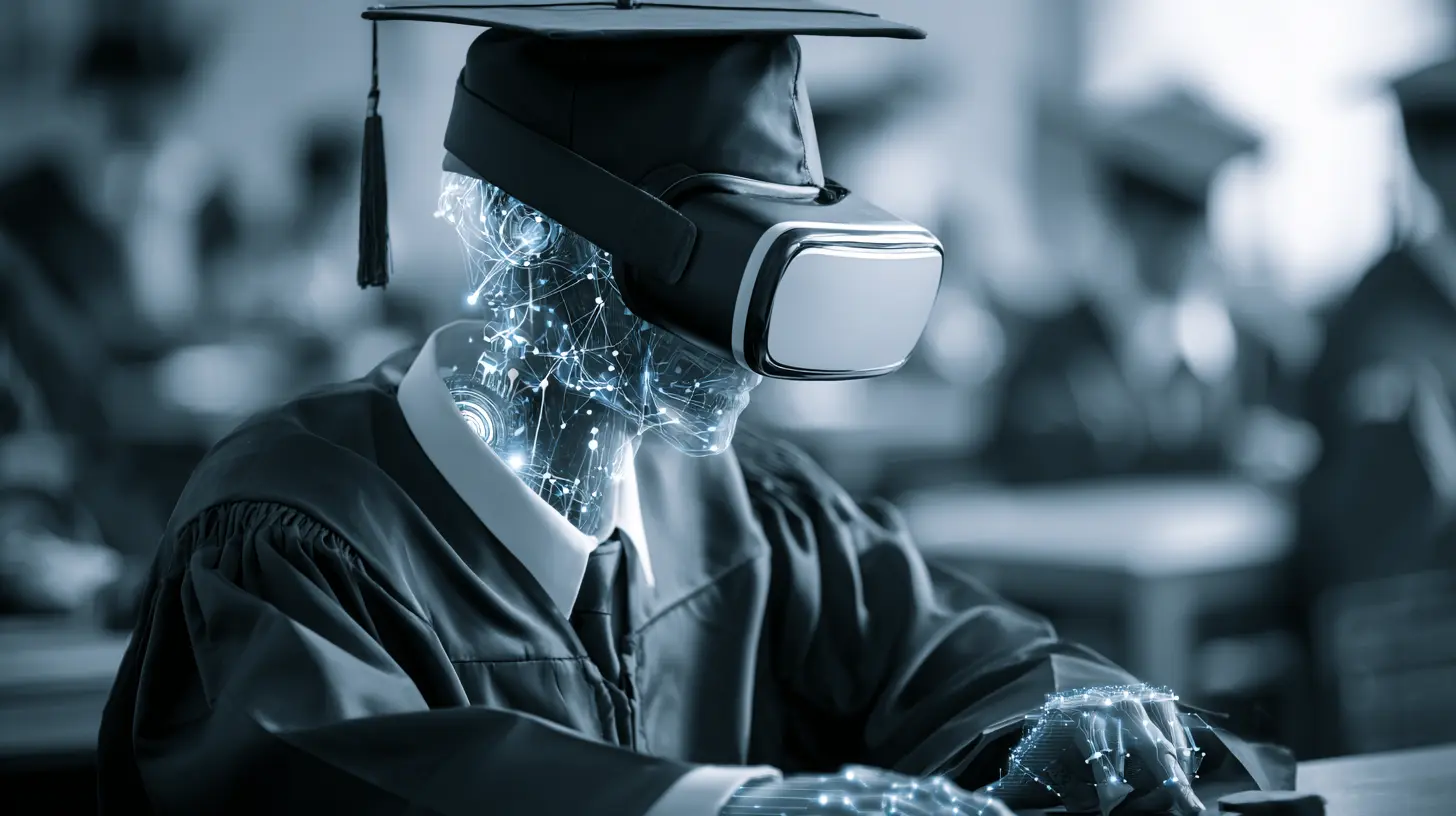
The "New Normal" Isn't What You Think It Is
When people say "new normal," they usually imagine a world where everyone stays home, wears pajamas, and types their way to a diploma. That is a lazy vision. That is not what is going to happen.The real new normal by 2027 is not going to be a 100% switch to online. That would be like saying the invention of the car meant every single person stopped walking. We still walk. We just also drive. The new normal is going to be a hybrid world. A world where the word "college" means something flexible.
Think of it like the music industry. We didn't kill concerts when streaming services showed up. We just changed how we listen. We still go to shows for the experience, the energy, the community. But we stream the music for convenience, for discovery, and for the deep cuts. Academia is heading the same way. You will still have the "concert" experience (the campus, the labs, the networking), but the "streaming" experience (the online degree) will be just as valid.

The Hard Truth: Why Your Boss Doesn't Care About Your Bricks
Let's talk about the biggest fear people have about online degrees: "Will employers take them seriously?"Here is the raw truth. By 2027, most smart employers will not care if you got your degree online or in person. They care about one thing: can you do the job? The pandemic forced every HR department in the world to realize that working from home is possible. If you can work from home, you can learn from home.
But here is the catch. Employers are not stupid. They will not respect a degree from "University of Random Website." They will respect a degree from a reputable institution that happens to be delivered online. Think Arizona State University, University of Illinois, Georgia Tech, or even Harvard Extension School. These are real schools with real rigor.
The stigma is dying. It is dying because the CEO of a Fortune 500 company might have taken an online MBA herself. It is dying because the world has seen that a person who can self-motivate to finish an online degree is often more disciplined than someone who just showed up to class because their parents were paying for it.

The Four Walls Are Crumbling: What Changes by 2027
So, what does this actually look like in three years? Let me paint you a picture.1. The Death of the "One-Size-Fits-All" Schedule
By 2027, the idea that a 19-year-old must start college in September and finish in May will look old-fashioned. Online degrees are already breaking this. You can start in January, take a break in March, and finish in December. Life happens. People have jobs, kids, sick parents. The new normal will be "learn at your own speed, within reason." This is not just for convenience. It is for survival. The job market changes too fast for a four-year degree to stay fresh. You will need to stack credentials, take micro-courses, and earn certificates along the way.
2. The Rise of the "Stackable" Degree
Nobody wants to commit to four years of anything anymore. It feels like a marriage before a first date. The new normal will be "stackable" credentials. You take a three-month certificate in data analytics. That counts toward a diploma. That diploma counts toward a degree. You build your education like you build a Lego castle. Online platforms are perfect for this. By 2027, the smartest universities will not sell you a degree. They will sell you a pathway. They will say, "Start here. See if you like it. Keep going."
3. The Campus Becomes a Hub, Not a Home
Let me be clear: physical campuses are not going to disappear. But they will change. They will become hubs for high-touch, high-value experiences. Think about it. Why go to a lecture hall to watch a professor talk when you can watch that same lecture on YouTube at 1.5x speed? You don't go for the lecture. You go for the lab work, the debate club, the networking event, the career fair, the late-night conversations that shape who you are.
By 2027, campuses will focus on the stuff you cannot do on a screen. Hands-on science. Theater. Sports. Group projects that require face-to-face friction. The online degree will handle the "information transfer" part. The campus will handle the "transformation" part.
The Skeptic's Corner: What About the Social Life?
I hear you. You are thinking, "But what about the social experience? What about making friends? What about growing up?"This is a valid concern. And it is the one thing that online degrees struggle with the most. You cannot replace a spontaneous dorm room conversation with a Slack message. You cannot replace the feeling of a campus quad in the fall with a JPEG.
But here is the thing: the "college experience" was already broken for millions of people. Not everyone gets to live in a dorm. Not everyone has the money for a meal plan. Not everyone fits into the mold of a traditional 18-to-22-year-old student. For a single mom working two jobs, an online degree is not a compromise. It is a lifeline.
By 2027, the best online programs will have solved the social problem. Not by pretending to be a virtual nightclub, but by creating real communities. Think small cohort groups that meet weekly. Think in-person meetups for local students. Think virtual study rooms that actually work. The social aspect will not be the same, but it will be real.
The Technology That Will Seal the Deal
Let's get a little geeky for a second. The reason online degrees will feel normal by 2027 is because the tech will be invisible.AI Tutoring: Imagine having a tutor available 24/7 that knows exactly where you struggle. No more waiting for office hours. No more feeling stupid for asking a question. AI will handle the basic teaching, freeing up human professors to do the deep work: mentoring, inspiring, connecting.
Virtual Reality (VR) Labs: You do not need a real chemistry lab to learn chemistry if you can mix virtual chemicals in a VR beaker and see the reaction in real time. By 2027, this will be standard for many online science degrees. It will not replace the real lab for advanced research, but it will be good enough for 80% of the coursework.
Better Assessment: No more multiple-choice quizzes that test your memorization. Online degrees will use project-based assessments. You build a portfolio. You solve a real problem. You defend your work in a video call. This is harder to cheat on, and it proves you actually know the material.
The Big Question: Will It Be "Normal" for Everyone?
No. And that is okay.By 2027, online degrees will be normal for certain groups of people. They will be the default for working adults, for people in rural areas, for parents, for military personnel, and for anyone who values flexibility over tradition. They will be the normal choice for graduate degrees, for professional certifications, and for the first two years of a bachelor's degree.
They will not be the normal choice for an 18-year-old who wants to join a fraternity and go to football games. And that is fine. The new normal is not about erasing the old normal. It is about expanding the definition of what "college" means.
Think of it like the gym. Some people need the loud, crowded gym with the heavy weights and the personal trainer yelling at them. Other people need the quiet, 24-hour gym where they can go at 2 AM in their own headphones. Both are gyms. Both work. The new normal is that we finally admit both are valid.
The Final Verdict: A New Definition of "Normal"
So, will online degrees be the new normal in academia by 2027?Yes. But not in the way you imagine.
It will not be a sudden switch where everyone stays home. It will be a slow, quiet shift in what we expect. You will stop asking, "Is that a real degree?" and start asking, "Is that a good program?" You will stop thinking of online learning as a backup plan and start thinking of it as a smart choice.
By 2027, a degree from a top university that you earned from your couch will carry the same weight as one earned in a lecture hall. The difference will be the person who earned it. Did they do the work? Did they learn the skills? That is all that will matter.
The walls of the ivory tower are coming down. Not because someone is smashing them, but because the world is finally realizing that learning does not require a building. It requires a brain, a connection, and a willingness to grow.
So, are you ready for the new normal? Because it is coming. And it looks a lot like freedom.
all images in this post were generated using AI tools
Category:
Online DegreesAuthor:

Fiona McFarlin
Discussion
rate this article
2 comments
Faelith McAnally
Online degrees are not just a trend; they represent a transformative shift in education. By 2027, embracing this change will empower learners worldwide, breaking barriers and making knowledge accessible to all. The future is here... let's seize it!
July 19, 2026 at 2:46 AM
Carly McTier
Online degrees are rapidly gaining acceptance, offering flexibility and accessibility. By 2027, they could become the standard, especially as institutions adapt to changing demands. It's crucial for students to consider how this shift impacts their learning and career opportunities.
May 25, 2026 at 12:32 PM
Fiona McFarlin
I agree, the shift towards online degrees is significant. Flexibility and accessibility can open doors for many, but it's important for students to stay informed about the quality and relevance of their programs.