Why Group Work Builds Better Problem-Solvers
19 February 2026
Let’s be real—group work often gets a bad rap. From the dreaded group projects in school where one person does all the work (we see you, overachievers!) to awkward brainstorming sessions at work, many people cringe at the thought of working with others. But what if I told you that group work isn't just a necessary evil—it’s actually a secret weapon for building better problem-solvers?
Yep, you read that right.
Group work can supercharge your creative thinking, open your mind to new perspectives, and sharpen your problem-solving skills in ways that working solo just can’t. Let’s take a deep dive into why teaming up makes us better thinkers and how it works like magic behind the scenes to train our brains for real-life challenges.
The Power of Many Minds
Ever heard the saying, "Two heads are better than one"? It’s not just a feel-good phrase. It’s rooted in actual science and human behavior. When you bring different people together to attack a problem, something amazing happens—their brains start bouncing off each other like ping-pong balls!Why is that so powerful?
Each person brings their own experiences, ideas, biases, and knowledge to the table. Combined, these diverse viewpoints create a rich mental soup that’s way more creative and well-rounded than what one person could cook up alone.
Imagine you’re stuck in a maze. Alone, you might keep hitting the same dead ends. But with a group? Suddenly, you've got five extra pairs of eyes and brains pointing out new paths. That’s the beauty of collaborative thinking.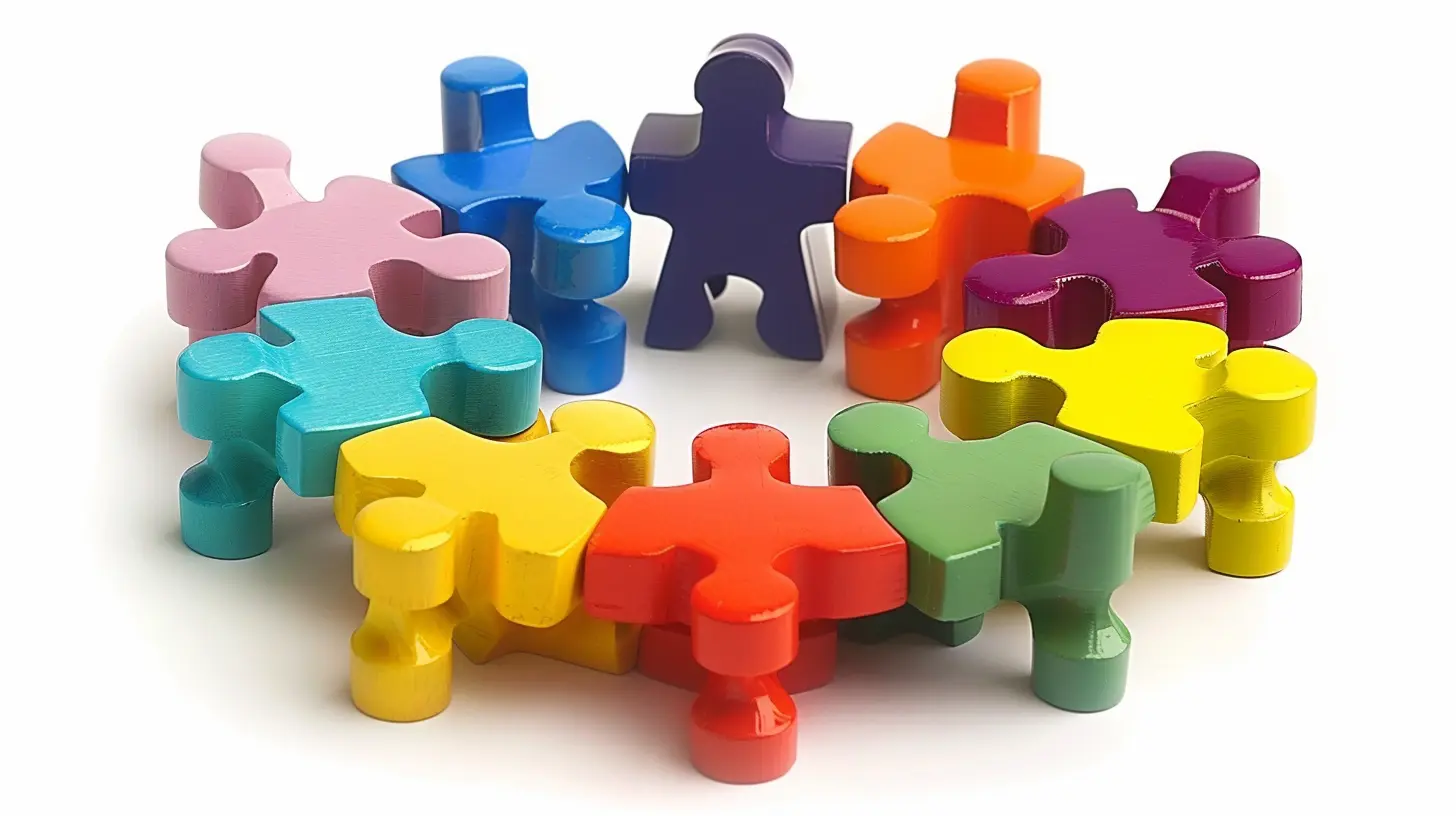
Group Work Mimics Real-Life Problem Solving
Let’s be honest—very few challenges in the real world are solved in isolation. Whether it's launching a product, organizing a community event, or cracking a tough math problem, success often comes from teamwork.Students who work in groups are essentially training for real life without even realizing it. They're learning how to:
- Listen actively 👂
- Share ideas clearly 💡
- Give and receive constructive feedback 🔄
- Disagree respectfully 🤝
- Find common ground 🤔
These are all critical skills for tackling everyday problems—and they’re best learned in a group. Think of group work as the gym for your problem-solving muscles.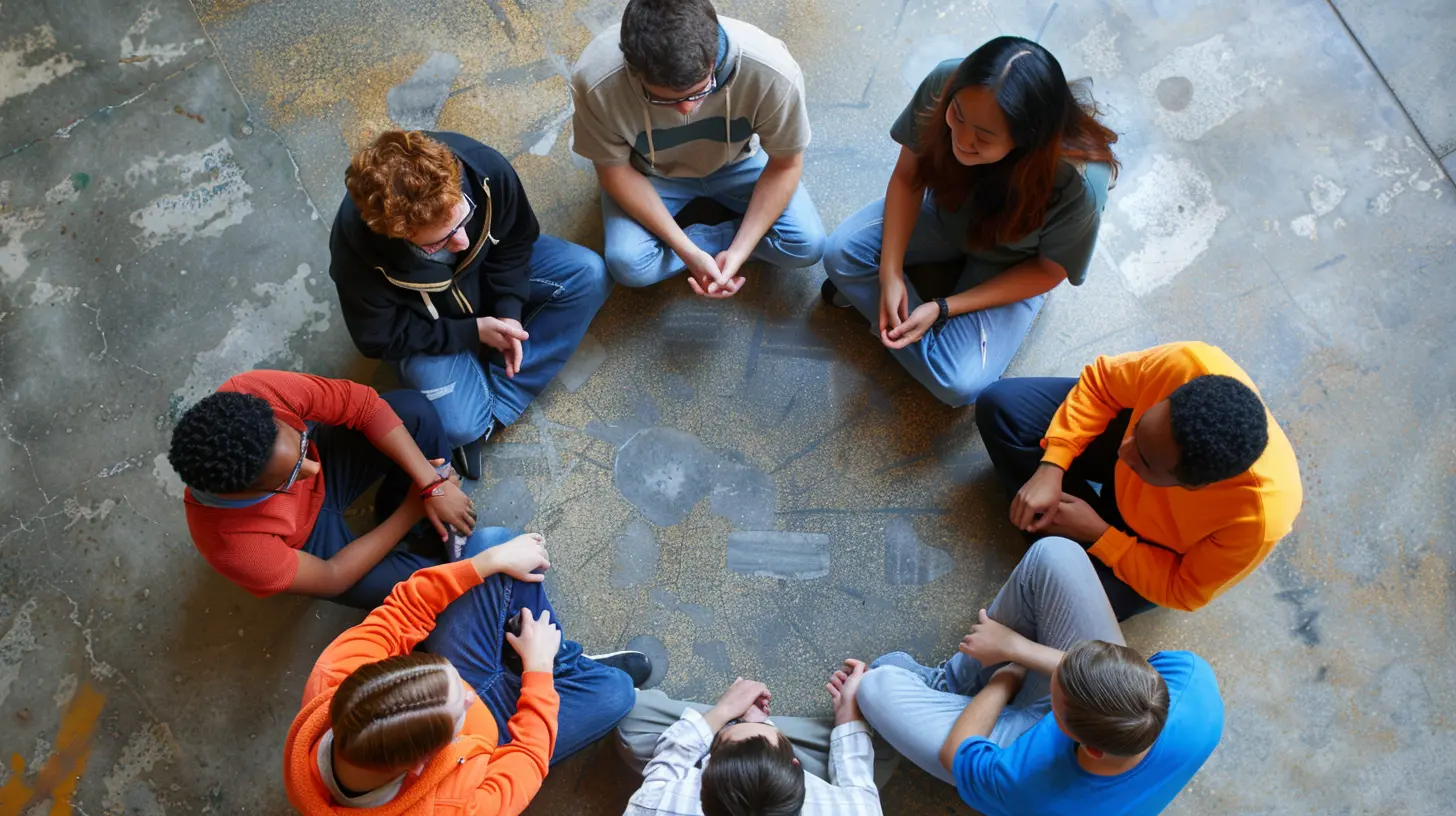
Diversity Drives Innovation
Let’s face it: no one has all the answers. And that’s a good thing! It means that our brains are wired to benefit from other people’s input. When people from different backgrounds, cultures, and disciplines come together, they spark innovation.Here’s a fun metaphor: Think of ideas like Lego blocks. One person might have blue blocks, another has red ones, and someone else has green. Alone, each person can build something simple. But when you combine their pieces? Boom! Now you're building a full-on Lego castle.
Diverse groups are known to solve problems faster and more creatively because they come at challenges from multiple angles. Group work encourages students to step outside their own bubble and look at problems through fresh lenses.
Communication is Key (and Group Work Teaches It!)
Let’s not sugarcoat it—communicating in a group can be tricky. You've got different personalities, opinions, and working styles clashing. But guess what? That challenge is part of the learning process.Group work teaches you how to:
- Express your thoughts clearly
- Ask questions when confused
- Clarify misunderstandings
- Manage group dynamics
- Resolve conflicts gracefully
These soft skills are absolutely critical for problem-solving. Why? Because even the best ideas fall flat if no one can understand or support them.
So, the next time you're explaining your point in a group and someone raises their hand in confusion? Don’t get frustrated—that’s part of becoming a better communicator, and in turn, a better problem-solver!
It Builds Confidence and Accountability
One of the sneaky benefits of group work is how it builds confidence. At first, you might hesitate to share your ideas, worrying they’re “not good enough.” But as you contribute more and realize your peers value your input, your confidence starts to bloom.On the flip side, being part of a group also teaches accountability. You realize others are depending on you, and that your piece of the puzzle matters. That combo—confidence + accountability—is like rocket fuel for problem solving.
Think of it this way. Confidence helps you try, and accountability makes sure you follow through. That’s a powerful combo right there.
Collaborative Learning Boosts Critical Thinking
Okay, let’s geek out for a second.Studies have shown that students who engage in collaborative learning—aka group work—develop stronger critical thinking skills over time. Why? Because they’re constantly asked to explain their reasoning, challenge ideas, and support their thought process with evidence.
In short, they’re not just passively absorbing information—they’re actively working through it. That effort rewires the brain to be more analytical and adaptable.
Imagine your brain as a toolbox. Every time you engage in thoughtful group work, you’re sharpening your tools and adding new ones. So when a new problem pops up? You've got exactly what you need to handle it.
It Prepares Students for the 21st Century Workplace
Let’s face it—today’s jobs require way more collaboration than they did 30 years ago. In our tech-driven, globally connected world, teams are often made up of people from different cities, countries, and even continents!Employers aren’t just looking for folks who can do the job—they’re looking for team players who can communicate, adapt, and think on their feet.
Group work in schools lays the foundation for these exact traits. It teaches students to:
- Collaborate in diverse teams
- Manage time and responsibilities
- Use digital tools for teamwork
- Handle pressure and deadlines
- Build respectful professional relationships
So while it might feel like “just another group project,” it’s actually preparing students for the fast-paced, team-oriented workplaces of the future.
Mistakes Become Learning Moments
One of the greatest things about group work? It's a safe space to mess up.Let’s break that down.
When you're solo and make a mistake, it can feel like a personal failure. But in a group, mistakes are shared, examined, and (best of all) learned from together. That creates a growth mindset—the belief that you can get better with effort.
Want to be a rockstar problem-solver? You’ve got to be comfortable failing fast and learning faster. Group work encourages exactly that.
Group Reflection Makes You Smarter
Ever had a moment when a group discussion helped you see something completely new?That’s reflection in action. Groups that take time to debrief, talk about what worked (or didn’t), and discuss lessons learned are doing what expert thinkers do all the time: they reflect.
Reflection helps us connect the dots. It lets us examine assumptions, reframe problems, and consider alternative solutions. And guess what? Reflection is way easier—and more meaningful—when it's shared.
Think of it as looking in a mirror, but with extra angles and better lighting. You get a clearer picture, and with that, better insights.
Group Work Creates a Sense of Belonging
Let’s not underestimate this last part—humans are social creatures. When groups work well together, they create a sense of belonging that actually boosts brainpower. Seriously.When people feel safe, supported, and valued, their brains release chemicals like oxytocin (aka the "feel-good" hormone). This helps reduce stress and increases creativity and focus—aka the golden ingredients of effective problem-solving.
So while group work might come with its fair share of hiccups, it can also build strong social bonds that make tackling tough challenges a whole lot easier—and a whole lot more fun.
Final Thoughts: It’s Time to Embrace the Power of Group Work
Group work isn’t perfect—but what in life is? The occasional clash of personalities or uneven workload doesn’t cancel out the massive upside group work offers.It makes us smarter, more adaptable, and better prepared for the real world. It teaches empathy, creativity, leadership, and resilience—skills that go hand-in-hand with problem-solving.
So the next time you’re asked to team up with others, don’t roll your eyes.
Lean in.
Speak up.
Listen.
Challenge and be challenged.
Because group work doesn’t just build better projects—it builds better problem-solvers.
And who wouldn’t want to be one of those?
all images in this post were generated using AI tools
Category:
Group WorkAuthor:

Fiona McFarlin
Discussion
rate this article
2 comments
Renata Kim
Great insights on the value of group work! Collaborative problem-solving not only enhances skills but also fosters creativity and diverse perspectives among team members.
March 10, 2026 at 12:54 PM
Fiona McFarlin
Thanks for your feedback! Group work really does open up new ways of thinking and strengthens our problem-solving abilities.
Gavin Peterson
Group work enhances problem-solving by fostering collaboration, diverse perspectives, and shared responsibility, preparing students for real-world challenges.
February 21, 2026 at 11:47 AM
Fiona McFarlin
Thank you for your insightful comment! I completely agree—collaboration in group work not only enriches problem-solving but also equips students with essential skills for future challenges.