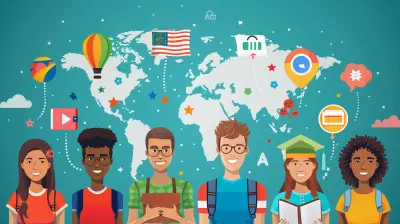
The Role of Technology in Shaping Distance Learning
12 December 2025
Distance learning has come a long way from those old-school correspondence courses that relied on snail mail. Remember when online education was just a futuristic idea? Well, thanks to technology, it’s now a reality shaping how we learn and teach. From virtual classrooms to AI-powered tutors, technology has revolutionized distance learning, making it more accessible, interactive, and effective.
So, how exactly has technology reshaped the way we learn remotely? Let’s dive in!

The Evolution of Distance Learning
Back in the day, distance learning was all about mailing coursework and waiting weeks for responses. It was slow, tedious, and lacked interaction. Fast forward to today, and we have instant access to educational content, live classes, and even virtual reality experiences—all thanks to technological advancements.With the internet, cloud computing, and smart devices, education is no longer confined to a physical classroom. Anyone, anywhere, with a decent internet connection, can now access high-quality education. That’s a game-changer!

How Technology is Transforming Distance Learning
Technology has improved distance learning in multiple ways. Let’s break it down into key aspects:1. Online Learning Platforms and LMS
Learning Management Systems (LMS) like Moodle, Blackboard, and Google Classroom have made life easier for both learners and educators. These platforms provide a structured way to:- Access study materials
- Submit assignments
- Take quizzes and tests
- Participate in discussions
Think of an LMS as an all-in-one virtual classroom that keeps everything organized. No more misplacing assignments or missing deadlines!
2. Live Video Conferencing
One of the biggest challenges of distance learning was the lack of real-time interaction. But with platforms like Zoom, Microsoft Teams, and Google Meet, students can now attend live lectures, ask questions, and engage in discussions as if they were in a physical classroom.Live video conferencing makes learning more engaging and interactive. It also allows for one-on-one tutoring sessions, group projects, and even virtual office hours with instructors.
3. Artificial Intelligence (AI) in Education
AI is playing a massive role in personalizing the learning experience. With AI-powered tools, learners get customized recommendations based on their progress, strengths, and weaknesses.Some ways AI enhances distance learning include:
- Smart tutoring systems: AI-powered tutors like Carnegie Learning and Cognii adapt to students' needs, providing personalized guidance.
- Automated grading: AI can grade multiple-choice quizzes and even some written responses, reducing the workload for instructors.
- Chatbots for instant support: Students can get quick answers to their queries without waiting for a teacher's response.
AI is like having a personal tutor in your pocket, always ready to help!
4. Virtual and Augmented Reality (VR & AR)
Imagine learning biology by walking through a 3D model of the human body or studying history by virtually visiting ancient Rome. That’s the power of VR and AR in education!VR headsets and AR apps make learning more immersive and hands-on. Instead of just reading about concepts, students can experience them in a virtual environment. This is particularly useful for technical subjects like medicine, engineering, and science.
5. Gamification in Learning
Who says learning has to be boring? Gamification—using game-like elements in education—keeps students engaged and motivated. Platforms like Kahoot, Duolingo, and Quizizz turn learning into a fun and competitive experience.By incorporating points, badges, leaderboards, and interactive challenges, gamification makes studying feel less like a chore and more like a game. Who wouldn’t want to level up in their education?
6. Cloud Computing for Easy Accessibility
Cloud computing has completely changed the way educational content is stored and accessed. With platforms like Google Drive, Dropbox, and OneDrive, students can:- Store their notes and assignments online
- Collaborate with peers on group projects
- Access learning materials from any device, anytime
No more worrying about losing files or running out of storage space! Plus, cloud-based education means students and teachers can work together in real-time, no matter where they are.
7. Mobile Learning (M-Learning)
Smartphones and tablets have become powerful learning tools. With mobile-friendly learning apps like Coursera, Udemy, and Khan Academy, students can continue their education on the go.Whether you're commuting, taking a break, or waiting in line at a coffee shop, mobile learning lets you squeeze in some study time whenever it’s convenient. Education is literally at your fingertips!
8. The Rise of Open Educational Resources (OER)
Textbooks can be crazy expensive, but thanks to Open Educational Resources (OER), students can access free, high-quality learning materials. Websites like OpenStax, MIT OpenCourseWare, and Khan Academy provide free courses, e-books, and research papers.OER makes education more affordable and accessible to students worldwide. You don’t need to spend a fortune to get a quality education anymore!

The Benefits of Technology in Distance Learning
Technology doesn’t just make education more convenient; it also brings several advantages:✔ Increased Accessibility
Students from remote areas or those with physical disabilities can now access high-quality education without barriers.✔ Flexibility in Learning
Learners can study at their own pace, balancing education with work, family, or other responsibilities.✔ Enhanced Engagement
Interactive tools like videos, simulations, and gamified learning keep students interested and motivated.✔ Cost-Effective Education
Online courses are often more affordable than traditional classroom education. Plus, there’s no commuting cost!✔ Global Collaboration
Students from different parts of the world can connect, collaborate, and learn together, fostering a global learning community.
Challenges of Technology in Distance Learning
Of course, it’s not all sunshine and rainbows. There are some challenges too:❌ Digital Divide
Not everyone has access to high-speed internet or advanced tech devices, making it difficult for some students to learn online.❌ Technological Glitches
Connectivity issues, software bugs, and system crashes can disrupt learning sessions.❌ Lack of Hands-on Learning Opportunities
Certain subjects, like laboratory-based sciences, require hands-on practice that virtual learning can't fully replicate.❌ Social Isolation
Without face-to-face interaction, students may feel disconnected, affecting their motivation and engagement.What’s the Future of Distance Learning?
With emerging technologies such as AI, 5G, and the Metaverse, the future of distance learning looks even more promising. Imagine attending a virtual university campus using VR or having an AI-powered teaching assistant that guides you through your studies 24/7.As technology advances, distance learning will continue to evolve, making education more personalized, immersive, and accessible. One thing’s for sure: the classroom of the future won’t be limited by four walls!
Conclusion
Technology has completely reshaped distance learning, turning it into a dynamic, interactive, and accessible experience. From AI-driven tutors to immersive VR lessons, the possibilities are endless. Of course, challenges exist, but as technology progresses, solutions will emerge, making online education even more effective.So, whether you're learning from your bedroom, a coffee shop, or halfway around the world, technology ensures that education is always within reach. The traditional classroom may never be the same again—and that’s a good thing!
all images in this post were generated using AI tools
Category:
Distance EducationAuthor:

Fiona McFarlin
Discussion
rate this article
2 comments
Brooks McGinn
Technology redefines education, bridging gaps, yet challenges our essence of connection and engagement.
December 21, 2025 at 12:07 PM
Fiona McFarlin
Thank you for your insightful comment! Indeed, while technology enhances access and bridges educational gaps, it also urges us to reconsider how we maintain authentic connections and engagement in learning.
Everett Hayes
Embrace tech in learning! It’s your trusty sidekick for success from anywhere!
December 12, 2025 at 12:33 PM
Fiona McFarlin
Absolutely! Technology is essential in distance learning, enhancing accessibility and engagement for all learners.