The Role of Geography in Shaping Human History
25 January 2026
When we think of history, we often picture empires, wars, revolutions, and larger-than-life figures. But behind all the epic events and charismatic leaders lies something more constant and less dramatic—geography. It's kind of like the stage where history unfolds. The mountains, rivers, deserts, and climates have steered human decisions and shaped civilizations in ways many of us overlook.
So, what if I told you that geography might be the unsung hero of human history? Let's break down how rocks, rivers, and even rainfall have nudged humanity forward—or held it back.
What Is Geography, Really?
Before we dive into its role in history, let’s quickly go over what we mean by "geography."Geography isn't just about maps and place names you had to memorize in school. It covers physical features like mountains, rivers, and soil types, plus human elements like population, culture, and economics as they relate to place and space.
There are two main types:
- Physical Geography – natural features of the Earth.
- Human Geography – how human culture interacts with the landscape.
When talking about shaping history, we’re mostly referring to physical geography and its influence on human choices.
Agriculture: The Birthplace of Civilizations
Why Did Farming Start in Some Places and Not Others?
Thousands of years ago, not everyone started planting seeds and growing crops at the same time. Weird, right? You’d think farming would be an obvious choice. But geography had a big say in where agriculture first took root.Take the Fertile Crescent in the Middle East. This region had rich soil, predictable rainfall, and a bunch of wild grains and domesticable animals. Basically, it offered the perfect starter pack for early farmers. No wonder it's often called the "Cradle of Civilization."
Other places like the Nile Valley or the Indus River region shared similar advantages—good soil and consistent water sources. These areas became early powerhouses of human development.
But in contrast, think about places like Australia or sub-Saharan Africa. Harsh climates, poor soil, and few native domesticable animals slowed agricultural growth. Geography set the pace for societal development.
Rivers: Nature's Superhighways
Why Are So Many Major Cities Near Rivers?
Ever notice how the most ancient and powerful civilizations often popped up alongside rivers? That’s no coincidence.Rivers like the Nile, Tigris-Euphrates, Indus, and Yellow River weren’t just water sources—they were lifelines. They made transport easier, irrigation possible, and trade more accessible. It's like they were nature’s highways before asphalt was even thought of.
For example:
- The Nile allowed Egypt to flourish, offering predictable flooding that enriched the soil.
- The Tigris and Euphrates fueled Mesopotamian agriculture.
- The Indus River enabled complex city planning in Harappa and Mohenjo-Daro.
But it’s not just ancient cities. Look at the modern world—cities like London, Paris, Cairo, and Shanghai are still hugging rivers. The legacy continues.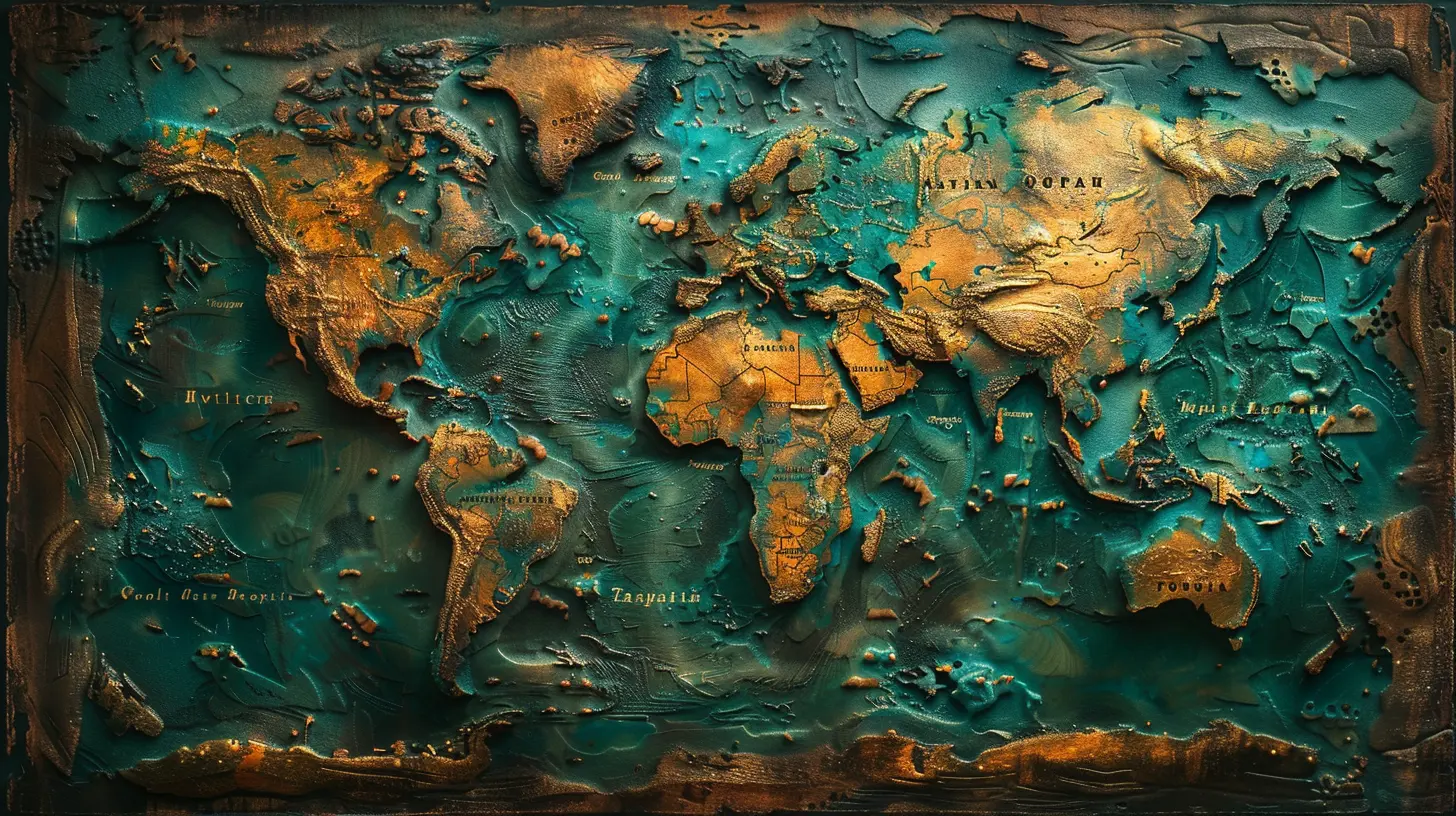
Mountains: Barriers and Borders
Mountains Keep People Apart (And Sometimes Together)
Mountains are beautiful, sure. But in historical terms, they’ve acted more like giant "Do Not Enter" signs.Take the Himalayas, for instance. They’ve long served as a massive wall between India and China. While they didn’t completely stop trade or contact (hello, Silk Road!), they did slow things down and helped both regions develop distinct cultures and languages.
Similarly, the Alps in Europe helped define boundaries and protect Roman territories from northern invasions—at least for a while.
But mountains can also bring people together when they form natural corridors. The Andes Mountains in South America shaped Incan society, guiding agricultural patterns and road systems across tough terrain.
Climate: The Silent Force
How Does Weather Shape Empires?
Climate isn’t just about whether or not you need to carry an umbrella. It can make or break entire empires.Take the Roman Empire. When the climate was relatively mild and rainfall predictable, Rome thrived. But shifting climate patterns (and some bad leadership) eventually contributed to its decline. Crops failed, prices soared, and people grew restless.
Then there’s Vikings. Their expansion during the 8th to 11th centuries was partly due to a brief warm period in the North Atlantic. Better weather meant better sailing and farming conditions back home, which allowed them to explore and raid more effectively.
Even Genghis Khan's rise ties into climate. Studies suggest a period of unusually warm and wet weather in Mongolia led to lush grasslands—perfect for feeding horses and fueling expansion.
Climate changes the rules of the game without ever saying a word.
Deserts: Isolation and Innovation
What Role Did Deserts Play?
Deserts might seem empty and lifeless, but they've had a big impact on human history.The Sahara Desert, for example, acted as a natural barrier. For centuries, it kept sub-Saharan Africa relatively isolated from northern Mediterranean civilizations. This isolation led to distinct cultural and technological development.
But deserts also sparked innovation. Think about Arabian cultures, which adapted to extreme dryness by developing irrigation techniques and caravan trade routes. The harsh environment forced people to get creative.
The Sea: Gateway or Wall?
Water Connects—And Sometimes Divides
While rivers connected civilizations, oceans and seas had a love-hate relationship with human history.The Mediterranean Sea is a great example. Rather than dividing Europe, Asia, and Africa, it acted more like a giant, shared neighborhood. Civilizations around it—like the Greeks, Romans, and Phoenicians—traded, fought, and borrowed ideas from one another.
But the Atlantic Ocean? That was a different story for a long time. Early civilizations didn’t have the tech to cross it safely. It wasn’t until the Age of Exploration that the ocean turned from a wall into a bridge.
Spain, Portugal, England, and others jumped on this new opportunity, changing the course of history forever. Colonization, trade routes, and cultural exchanges exploded—all because people figured out how to tame the sea.
Natural Resources: The Fuel of Power
Why Do Some Countries Seem "Lucky"?
Let’s be real—some places just hit the geological jackpot.Regions rich in natural resources like gold, oil, fertile land, and fresh water have always had an edge. Just look at:
- Mesopotamia's fertile soil
- West Africa's gold mines
- England's coal and iron during the Industrial Revolution
- The U.S. with vast farmland and coastlines
These resources often attracted trade, settlers, and sometimes invaders. They also propelled economic development and political power.
But here’s the twist—having resources isn’t always a good thing. It can lead to conflict, exploitation, and dependency, especially if not managed well. Geography gives the tools, but humans choose how to use them (or misuse them).
Geographic Luck: Jared Diamond's Take
You might've heard of Jared Diamond, the author of "Guns, Germs, and Steel." His argument? Geography is the real reason why some societies advanced faster than others.In a nutshell, he says:
- Eurasia had the best crops and animals.
- Its east-west axis made it easier for ideas and crops to spread.
- Societies there could build on each other’s advances.
Whether you totally agree with him or not, his theory gets at a big idea: geography isn’t just background noise—it’s the scriptwriter whispering in history's ear.
Geography in Modern Times
Does Geography Still Matter Today?
Absolutely. We may have airplanes, satellites, and the internet, but geography still shapes our lives.Countries with access to the sea often dominate global trade. Those with harsh climates may struggle with agriculture and infrastructure. Even in politics, geography plays a role in border disputes, natural disaster planning, and military strategy.
Think of Russia—its vast size and freezing winters have both protected and challenged it. Or Japan, whose island geography helped it resist invasion but also forced it to rely heavily on maritime trade.
Even in the age of globalization, geography is still calling the shots—just more quietly.
Final Thoughts: Geography Is the Ultimate Influencer
So next time you read about a battle, a revolution, or a cultural movement, ask yourself—what was the land like? Was there a river nearby? Mountains in the way? Was the climate changing?Because behind every turning point in history, there’s a landscape that made it possible—or inevitable.
Geography didn’t just influence history. In many cases, it wrote the first draft.
all images in this post were generated using AI tools
Category:
Social StudiesAuthor:

Fiona McFarlin
Discussion
rate this article
2 comments
Bennett McLaury
Geography: the silent architect of history.
February 22, 2026 at 1:50 PM
Fiona McFarlin
Thank you! Geography indeed serves as a foundational backdrop, influencing cultures, economies, and conflicts throughout history.
Solara Duke
Geography: the ultimate game of human Tetris, where mountains, rivers, and deserts decide whether we're building civilizations or just playing hide and seek with history!" 🌍🎮
January 27, 2026 at 5:08 AM
Fiona McFarlin
That's a creative way to put it! Geography indeed shapes civilizations, influencing where we thrive or struggle throughout history. 🌍✨