The Rise of Hybrid Education Models in 2026
19 April 2026
Remember the great educational shuffle of 2020? Overnight, our classrooms moved from brick-and-mortar buildings to little boxes on a Zoom screen. It was chaotic, it was stressful, and if we’re honest, it was a bit of a blunt instrument. But here’s the thing about blunt instruments—they can break things open to reveal something new. Fast forward to 2026, and we’re not just going back to normal or staying fully online. We’re witnessing the intelligent, deliberate, and frankly exciting rise of hybrid education models. This isn’t a temporary patch; it’s a complete reimagining of how learning happens. Think of it not as a simple mix of online and offline, but as a smoothie—the right blend of ingredients, chosen for specific benefits, creating something entirely new and more powerful than its parts.
So, what’s fueling this rise? Why is 2026 shaping up to be the tipping point? Let’s pull back the curtain.
The Perfect Storm: Why 2026 is the Hybrid Horizon
Several powerful currents are converging to make hybrid learning the dominant model. It’s like the educational stars have finally aligned.First, the technology has matured. We’re past the era of frozen video and echoing audio. In 2026, platforms are seamless, intuitive, and integrated. We’re talking about virtual reality (VR) field trips to the Roman Colosseum, AI tutors that adapt to a student’s frustration level in real-time, and collaborative digital whiteboards that feel as natural as pen and paper. The tech isn’t a barrier anymore; it’s an enabler, a magic portal that expands the walls of the classroom.
Second, our mindset has shifted. Students, parents, and educators have had a taste of flexibility. We’ve seen that a student can thrive when they can review a lecture recording at their own pace, or when a quiet kid blossoms contributing to a discussion forum. The rigid 8 AM-to-3 PM, seat-time-based model is being questioned. We now demand education that fits into our lives, not the other way around.
Finally, there’s a growing hunger for personalization. The factory-model of education, where every student gets the same lesson at the same time, is showing its age. Hybrid models are the vehicle for truly differentiated learning. They allow educators to use in-person time for what humans do best: deep discussion, hands-on projects, mentorship, and social-emotional learning. The asynchronous, online components handle content delivery, practice, and basic mastery. It’s a smarter division of labor.

What Does a 2026 Hybrid Classroom Actually Look Like? (Spoiler: It’s Cool)
Forget the image of half the class on a screen while the other half is in the room. That’s the old, clunky version. The hybrid model of 2026 is fluid and dynamic.Let’s follow a student named Maya through her week. On Monday morning, she’s at home. She logs into her Learning Dashboard, where her AI learning companion suggests she start with a 15-minute interactive module on cellular mitosis. It’s gamified, with short quizzes and stunning 3D models she can manipulate. This isn’t homework; it’s pre-work. The system knows that Tuesday is her in-person lab day.
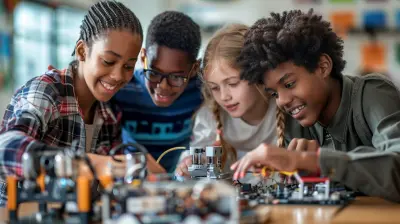
Tuesday, Maya goes to campus. Her lab group doesn’t spend time listening to a lecture about mitosis—they already engaged with that content. Instead, they dive straight into using microscopes, preparing slides, and analyzing real cell samples. The teacher circulates, asking probing questions, helping them connect their online learning to the tangible world. The in-person time is for application, collaboration, and critical thinking.
Wednesday might be a “flex day.” Maya could choose to attend a small-group tutorial online for extra help on a math concept, work independently on a digital portfolio in the library, or participate in a student club meeting held in a hybrid format, with some members physically present and others joining via a 360-degree camera that lets them pan around the room. The day molds to her needs.
This model acknowledges a simple truth: not all learning objectives are created equal. Some are best achieved alone with a great video, some through debate, and some by literally getting your hands dirty. Hybrid is about matching the method to the goal.

The Superpowers of a Hybrid System: More Than Just Convenience
The benefits of this evolved model go far beyond just letting students wear pajamas for a morning class. We’re talking about fundamental upgrades to the educational experience.* Hyper-Personalized Learning Pathways: Imagine an educational GPS. The hybrid model, powered by learning analytics, can constantly reroute. If a student aces a digital quiz on quadratic equations, the system can push them forward to advanced challenges. If they struggle, it can offer alternative resources—a video explanation, a step-by-step guide, a link to a peer study session. The path isn’t fixed; it’s built in real-time for each traveler.
* Democratizing Access and Equity: This is a big one. Hybrid models can level the playing field. A brilliant student in a rural area can access advanced seminars from top institutions online. A student managing a health condition can maintain continuity with their class without constant physical presence. Resources—from digital library archives to guest speakers from across the globe—are no longer locked behind geographic or socioeconomic walls.
* Mastery Over Seat Time: The focus shifts from “Did you put in the hours?” to “Did you actually learn it?” Students can progress as they demonstrate competency. This reduces anxiety, eliminates boredom for quick learners, and provides crucial support for those who need more time. It makes learning the constant and time the variable, which is how it should be.
* Empowering Educators: Teachers in 2026 are less like lecturers and more like learning conductors or coaches. The grunt work of grading multiple-choice quizzes? Automated, with analytics delivered to the teacher. This frees up their invaluable human skills for lesson design, one-on-one mentorship, fostering classroom community, and facilitating rich, in-person experiences. Their role becomes more creative and impactful.

Navigating the Hybrid Highway: Challenges and Considerations
Of course, this new landscape isn’t without its potholes. A smooth transition requires us to be clear-eyed about the challenges.The digital divide is the most pressing issue. True equity requires ensuring every student has not just a device, but reliable, high-speed internet and a conducive learning environment at home. In 2026, this is seen not as an optional add-on, but as essential public infrastructure, like electricity or water.
Then there’s the need for teacher training and support. You can’t hand an educator a suite of futuristic tools without proper training. Professional development in 2026 focuses on digital pedagogy, managing hybrid classrooms, and using data to inform instruction. It’s a new skillset, and it needs investment.
We also must guard against isolation and burnout. The flexibility of hybrid learning can blur the lines between school and home life. Students and teachers alike need to develop strong boundaries and self-regulation skills. Schools are countering this by intentionally designing “high-touch” in-person moments focused on connection and well-being. That lab day for Maya isn’t just about science; it’s about laughter, shoulder-to-shoulder collaboration, and feeling part of a community.
Finally, assessment needs a revolution. If the model is hybrid, our tests can’t be stuck in the past. We’re seeing a move towards authentic assessments: digital portfolios, project-based learning outputs, peer reviews, and real-world problem-solving documented online. The assessment proves you can do something, not just parrot information.
The Future is a Blend: What Comes Next?
As we look beyond 2026, the hybrid model is the foundation, not the finale. It’s the platform upon which even more innovative practices will be built.We’ll see the rise of Micro-School Networks, where small, local learning pods use hybrid tools to connect to specialized teachers and global peer groups. Competency-Based Education will become mainstream, fully decoupling advancement from age and grade level. And the integration of Immersive Tech—like VR and AR—will make the online components of hybrid learning breathtakingly experiential. Imagine a history lesson where you’re not reading about ancient Egypt, but standing in a digitally reconstructed marketplace.
The rise of hybrid education models in 2026 isn’t about choosing between the physical and the digital. It’s about finally, intelligently, marrying the two. It’s about creating an education that is as adaptable, dynamic, and unique as the students it serves. It recognizes that learning isn’t a place you go, but an activity you do—anywhere, anytime, and in the way that works best for you. The classroom of the future isn’t just a room. It’s an ecosystem, and it’s already taking root.
all images in this post were generated using AI tools
Category:
Distance LearningAuthor:

Fiona McFarlin
Discussion
rate this article
2 comments
Harlow Weber
Exciting insights! Hybrid education truly shapes our future.
April 22, 2026 at 6:30 PM
Fiona McFarlin
Thank you! I believe hybrid education is indeed a game-changer for the future of learning.
Lorna Benton
Embrace the future of learning! Hybrid education models empower students to thrive, blending flexibility with opportunity. Dream big!
April 21, 2026 at 12:51 PM