The Chemistry of Color: Using pH Indicators to Create Art
20 March 2026
Have you ever dipped a paintbrush into purple cabbage juice and watched in awe as the color changed right before your eyes? Or maybe you've been fascinated by the idea that chemistry, something you often associate with complex equations and lab coats, could actually be used to make... well, art?
Let’s be honest. Most of us never thought science—especially chemistry—had anything to do with creativity. But the truth is, chemistry is hiding behind every masterpiece, every color change, and every jaw-dropping art project that seems like magic.
Welcome to the colorful and slightly geeky world of pH indicators and how they can be used to create some seriously cool art. This isn’t just a fun science experiment – it’s chemistry with a palette.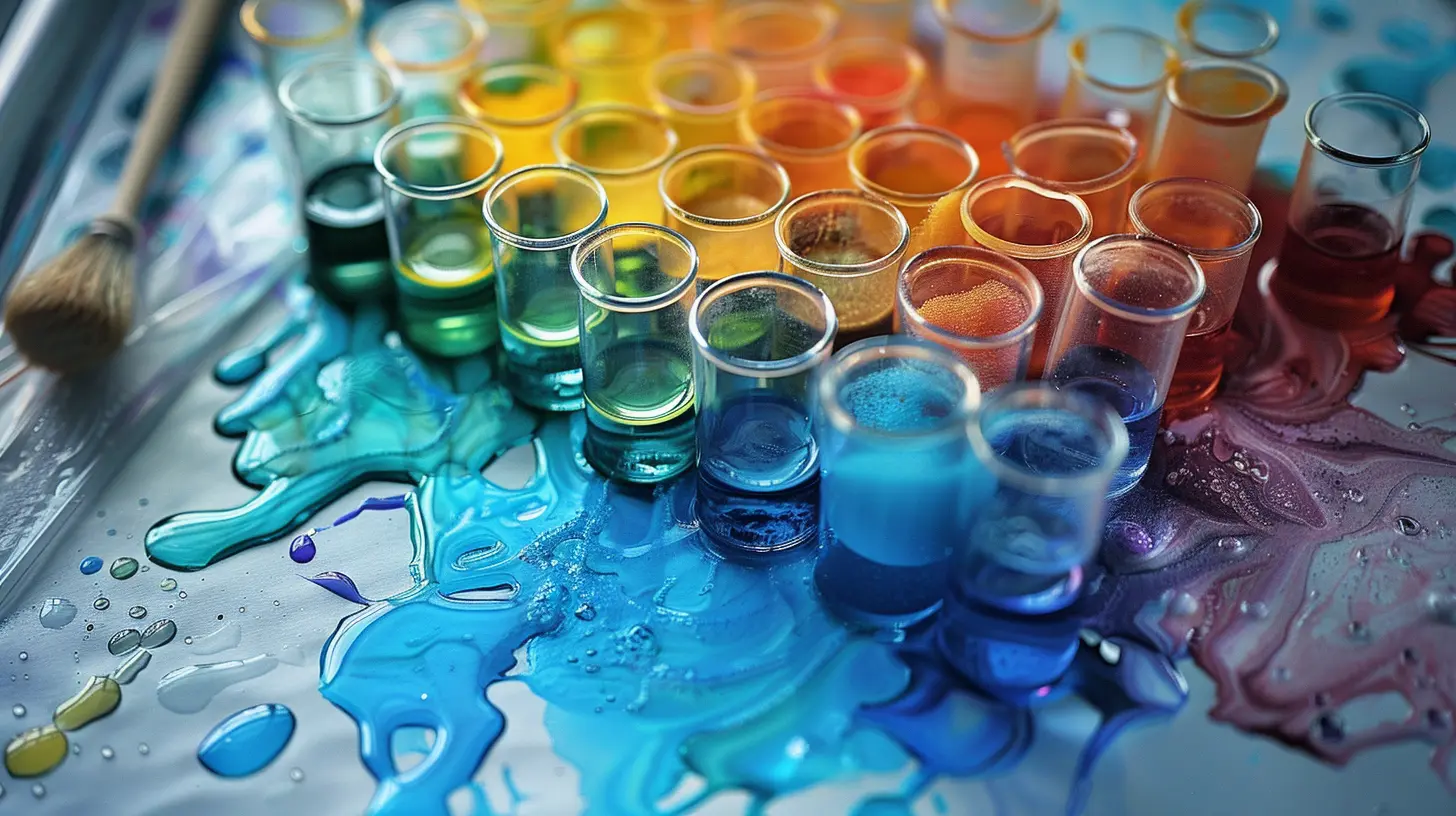
What Is pH, Anyway?
Before diving into colorful concoctions, let’s get the basics down.pH is a scale that tells us how acidic or basic (alkaline) a substance is. It ranges from 0 to 14:
- Anything below 7 is acidic (think lemon juice).
- 7 is neutral (like pure water).
- Above 7 is basic (like baking soda or soap).
But how do we see pH? That’s where indicators come in—they help us visualize the acidity or alkalinity of substances by changing colors.
Pretty cool, right? But it gets even better.
Say Hello to pH Indicators – Nature's Mood Rings
pH indicators are substances that react with acids or bases and change color depending on the pH level of the solution. Think of them like mood rings for chemistry—they respond to their environment, and their “moods” show up as gorgeous hues.Some indicators are synthetic, like phenolphthalein or bromothymol blue, but others are all-natural and tucked away in your kitchen. Ever heard of red cabbage juice? That’s one of the most vibrant and accessible natural indicators out there.
Here’s a quick (very non-boring) example of how red cabbage reacts to different pH levels:
| Substance | pH Level | Color of Red Cabbage Juice |
|---------------------|----------|-----------------------------|
| Lemon Juice | ~2 | Bright pink |
| Vinegar | ~3 | Magenta |
| Water | ~7 | Purple |
| Baking Soda | ~9 | Blue |
| Ammonia | ~11 | Green/yellow |
Suddenly, your fridge becomes a chemistry lab, and your kitchen table becomes an art studio.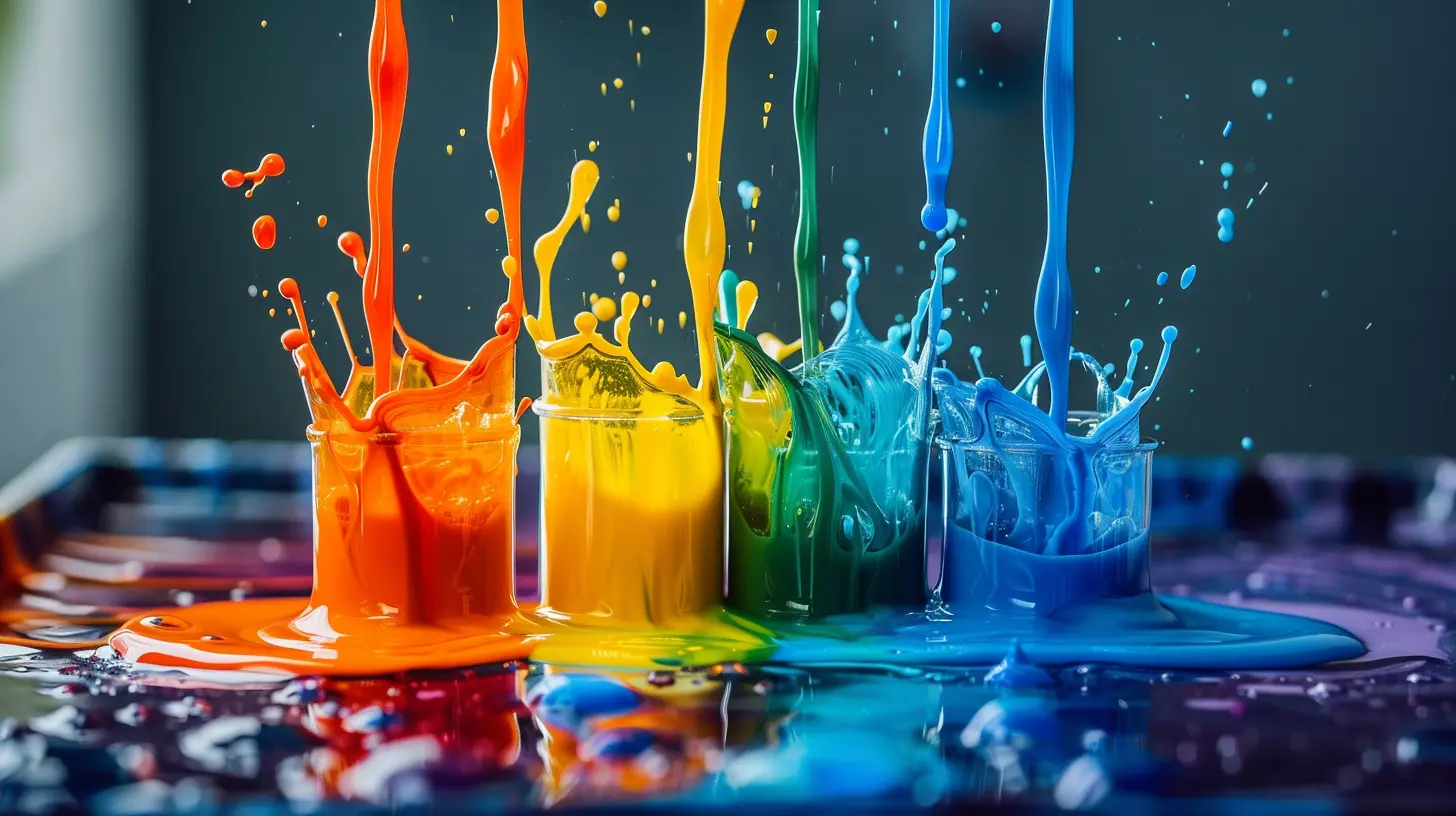
Painting with Acids and Bases
So how do you turn this mesmerizing color-changing magic into real art?Here’s how. You use natural pH indicators like cabbage juice as your paint base, then apply various acidic or basic substances to change the colors. The result? A chemical reaction that looks like watercolor magic.
Materials You’ll Need:
- Red cabbage (chopped)- A pot and strainer
- Water
- White watercolor paper or coffee filters
- Brushes, droppers, or cotton swabs
- Acids: vinegar, lemon juice
- Bases: baking soda (mixed with water), soap, or even antacids
How to Make the Cabbage Juice:
1. Boil the chopped cabbage in water for about 10 minutes.
2. Let it cool.
3. Strain it. The purple liquid is your pH indicator paint.
Now comes the fun part...
DIY Chemistry Art Project: “Mood” Masterpieces
Ready to get messy?1. Start by painting your paper with the cabbage juice. Let it dry.
2. Then, "paint" over sections with your household acid or base using a brush or a dropper.
3. Watch the colors shift—purples become pinks or blues or greens depending on what you add.
You just created art from a chemical reaction. Without mixing paints. Without buying expensive supplies. Just using science and a little creativity.
Whether it turns into a galaxy-like swirl of colors or a tie-dyed work of art, you've just created something truly unique—straight from molecules to masterpiece.
Beyond the Cabbage: Other Natural pH Indicators
Red cabbage isn’t the only game in town. There are other natural indicators hiding in your kitchen and garden. Each brings its own color palette and personality.1. Butterfly Pea Flower
Used in herbal teas, it turns from blue to pink with acid.2. Hibiscus Tea
Dark red in its natural state, it becomes lighter and pinker with acid and darker with base.3. Beet Juice
Beets aren't as sensitive but can still show subtle shifts.4. Turmeric
It turns from yellow to red-brown in the presence of a base—great for bold, earthy tones.These can replace or complement cabbage juice in your pH art—it’s like having a whole new set of paints!
Why pH Art Actually Matters (Beyond the Fun)
Sure, this is fun, messy, and Instagram-worthy. But why is it important?Well, here's where things get deep. This kind of activity blurs the line between left-brain and right-brain thinking. You're not just learning chemistry—you’re feeling it, seeing it, experimenting with it.
For kids, this means a tactile, visual way of understanding abstract science concepts. For adults? It's a creative way to rekindle curiosity and break down the "I was never good at science" barrier.
Plus, using natural materials and understanding the reactions gives us a sustainable way to engage with both science and art.
A Quick Chemistry Refresher (Stay with Me — It Won’t Hurt)
So, what’s happening on a molecular level?Red cabbage, for example, contains anthocyanins—plant pigments that react with hydrogen ions. In acidic environments, there are more hydrogen ions, and the anthocyanins shift color. In basic environments, there are fewer hydrogen ions (or more hydroxide ions), and the pigment shifts again.
Boom. Color shift.
It’s like giving the molecules a personality—some like it acidic, others like it basic, and some prefer to stay neutral purple.
Tips for Creating Stunning pH Artworks
Want your art to pop? Here are a few hot tips to make your science-based masterpiece a success:🖌️ Use Texture:
Try paper towels, coffee filters, or textured watercolor paper. They absorb the indicator differently and create interesting effects.🎯 Control the pH:
Use droppers to apply acids and bases precisely. Think of them like a fine liner in a painter’s set.🌈 Experiment with Layers:
Let one layer dry before adding another. You might discover new color combos you didn't expect.🧪 Get Creative with Chemicals:
Try adding aspirin, soda, or antacids. They'll shift the pH indicators in different directions—and you might stumble upon a color unique to your mix.Turning This Into a Teaching Moment (Without Being Boring)
Teachers, parents, homeschoolers—listen up! pH indicator art is a gold mine for cross-disciplinary learning.Here’s why:
- Science: Teaches about acids, bases, and chemical reactions.
- Art: Encourages creativity, composition, and design.
- Environmental Studies: Use only natural/biodegradable materials.
- Math: Measure pH, mix ratios, and make data tables.
That’s four birds with one cabbage.
You’re not just coloring for fun—you’re making education colorful (literally and metaphorically).
What This Teaches Us About Chemistry and Beauty
Too often, science and art live in separate universes. But in reality, they’re two sides of the same creative coin.When you use pH indicators to make art, you’re revealing hidden worlds. You're taking invisible chemical data and turning it into something visual and expressive.
Colors aren’t just pretty—they’re evidence of change. They’re snapshots of chemical conversations happening right on your paper.
It’s isn’t just fun—it’s profound. It teaches us that even the smallest, invisible things in nature can create something beautiful.
When Science Meets Soul
What I love most about pH indicator art is that it’s not just a neat trick. It's an experience—a reminder that science isn’t always sterile and distant. Sometimes, it’s right there in your kitchen. Sometimes, it’s messy and beautiful and unpredictable.And sometimes? It lets you make art that no one else in the world could replicate—because your exact blend of conditions, chemicals, and creativity is 100% unique to you.
So next time you think science is all numbers and no heart, whip out the cabbage, mix up some vinegar, and watch the magic unfold. You just might change your mind—and your canvas.
Final Thought: The World Is a Canvas, and Chemistry Is Your Palette
pH indicator art reminds us that creativity isn’t limited to brushes and paints or formulas and beakers. It lives at the intersection of curiosity and expression.Whether you're a science nerd, an artist, a teacher, or just someone who likes cool colors, this experiment-turned-art is for you.
So, go ahead. Get messy, mix things up, and paint like a chemist. Because in the end, the chemistry of color is just another way to tell your story.
all images in this post were generated using AI tools
Category:
Science ExperimentsAuthor:

Fiona McFarlin
Discussion
rate this article
2 comments
Tilly Castillo
This article beautifully blends science and creativity, showcasing how pH indicators can transform art. It inspires us to explore the world of colors and chemistry in such an innovative way. Thank you!
March 31, 2026 at 3:16 AM
Fiona McFarlin
Thank you for your kind words! I'm thrilled to hear that the article inspired you to explore the intersection of art and chemistry.
Remington McKinley
This article beautifully illustrates the intersection of chemistry and art, highlighting how pH indicators can transform creative expression. By exploring the science behind color changes, it encourages students to engage in experiential learning, fostering a deeper appreciation for both disciplines and their interconnectedness in artistic endeavors.
March 23, 2026 at 8:33 PM
Fiona McFarlin
Thank you for your insightful comment! I'm glad you found the connection between chemistry and art so engaging. It's amazing how science can inspire creativity.