Promoting Global Citizenship Through Civic Learning
24 June 2026
In a world that's more connected than ever, it's essential that we start seeing ourselves not just as citizens of a country, but as citizens of the world. But what does that really mean? And how do we teach it? That's where civic learning comes into play. By empowering students with the knowledge, skills, and values needed to engage as global citizens, education becomes a powerful tool for shaping a better future for everyone.
Let’s unpack how promoting global citizenship through civic learning can make a real difference—starting in classrooms and rippling across communities and continents.
What Is Global Citizenship Anyway?
When you hear "global citizenship," what’s the first thing that pops into your head? Maybe it’s someone traveling the world doing volunteer work. Or maybe it’s a person standing up for human rights on a global stage. While those are great examples, global citizenship is much simpler—and much more inclusive.Global citizenship is the idea that we’re all part of one global community. It means recognizing that our actions affect people not just next door, but across the planet. A global citizen is someone who:
- Is aware of the wider world
- Respects and values diversity
- Understands global issues and how they connect to local ones
- Takes responsibility for making the world more just, peaceful, and sustainable
The good news? You don’t need a passport or a plane ticket to become one. You just need awareness, empathy, and the willingness to engage.
Civic Learning: The Gateway to Global Citizenship
If global citizenship is the "what," civic learning is the "how." Civic learning involves teaching students about their rights and responsibilities as citizens—not just in their country, but in the wider world.So, what does that look like in practice?
- Understanding governance and democracy
- Exploring different cultures and perspectives
- Learning about human rights and social justice
- Engaging in community service and global projects
- Practicing critical thinking and respectful debate
Think of civic learning as the toolkit that helps young people go from observers to active participants in society. And when it’s directed toward global issues, it shapes students into changemakers with a global mindset.
Why Promoting Global Citizenship Matters More Than Ever
Let’s face it—our world is facing some serious challenges. Climate change, inequality, pandemics, armed conflict… the list goes on. No single country can solve these problems alone. We need cooperation, empathy, and a shared sense of responsibility.That’s where global citizenship shines. By encouraging students to think beyond borders, we’re planting the seeds of peace, sustainability, and social justice. We’re training the next generation not just to ask, “What’s in it for me?” but “What’s best for us all?”
And hey, it’s not only about tackling big problems. Global citizenship also helps students thrive in their personal and professional lives. In a globalized job market, the ability to communicate across cultures and work in diverse teams is a superpower.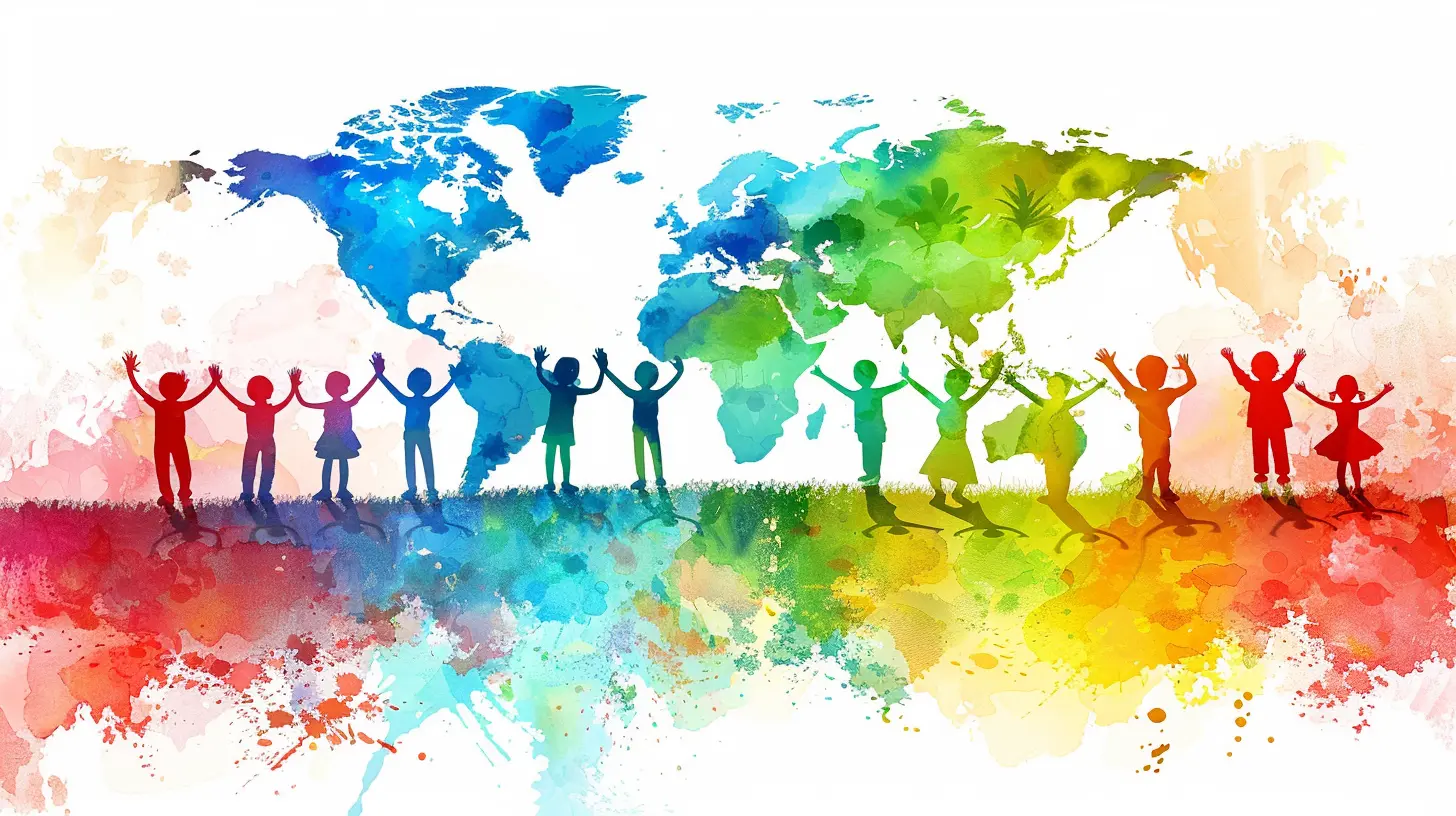
The Role of Schools and Educators
Now that we know why global citizenship matters, let’s talk about where the magic happens—schools. Classrooms are more than just places to memorize facts; they’re breeding grounds for empathy, understanding, and action.Here’s how educators can integrate civic learning to promote global citizenship:
1. Start with the Curriculum
Teachers can embed global issues across subjects. For example:- In history, explore global movements for civil rights
- In science, discuss climate change's worldwide impact
- In literature, read stories from different cultures
This isn’t about adding more to the syllabus; it’s about weaving global perspectives into what students are already learning.
2. Encourage Critical Thinking
Let’s be honest—there’s a lot of misinformation out there. Helping students think critically, question sources, and see multiple sides of an issue makes them smarter citizens and better humans.Ask questions like:
- Who benefits from this message?
- What voices are missing in this narrative?
- How does this issue affect communities differently?
3. Promote Active Participation
Learning about change is important—but being the change? That’s where the real growth happens.Encourage students to:
- Join or start social action projects
- Participate in Model United Nations
- Volunteer locally with a global mindset
- Connect with students from other countries through digital exchanges
Small actions can have massive ripple effects.
4. Create a Safe Space for Dialogue
Talking about big issues—like race, religion, poverty, or politics—can be tough. That’s why it’s crucial to create an environment where students feel safe to speak their truth and listen with an open mind.Ground rules like "stay curious," "speak from experience," and "assume good intentions" go a long way in creating respectful, productive discussions.
The Power of Storytelling in Global Citizenship
Stories stick. Facts may inform, but stories inspire. When teaching global citizenship, personal narratives and real-life accounts can powerfully illustrate complex ideas.Imagine a student learning about refugee crises not just through numbers, but through a story of a teenager forced to flee their home. That connection? It sparks empathy. Suddenly, the issue isn’t abstract anymore—it’s human.
Educators can use documentaries, books, podcasts, and even guest speakers from various backgrounds to bring global issues to life.
Technology as a Bridge, Not a Barrier
Sometimes, people think global learning is out of reach for schools with limited budgets. But thanks to technology, global connections are more accessible than ever.Virtual exchange programs, collaborative projects with classrooms abroad, and online simulations can all offer rich, meaningful interactions across borders.
Apps like Flipgrid, PenPal Schools, and iEARN make it easy to engage students in global conversations—right from their smartphones or laptops.
Addressing Challenges and Misconceptions
Let’s be real—promoting global citizenship isn't always smooth sailing. Critics might say it diverts attention from national identity or imposes certain values. Others worry it’s too idealistic or hard to measure.But here’s the thing: Global citizenship doesn’t replace local or national identity—it adds to it. It helps kids understand that they can love their country and still care about people thousands of miles away.
And yeah, it may be tough to quantify outcomes like empathy and open-mindedness. But the deeper understanding and broader perspective students gain? That’s the real ROI.
Instead of “either-or,” think “both-and.” Students can be proud Americans, Indians, Nigerians, or Brazilians—and still see themselves as part of something bigger. It’s about expanding the circle, not erasing it.
Parents and Communities: Your Role Matters Too
While schools play a huge role, parents and communities are the real MVPs when it comes to reinforcing global citizenship outside the classroom.Parents can support civic learning by:
- Talking about world events at home
- Encouraging curiosity about different cultures
- Modeling respectful dialogue and empathy
- Supporting diverse friendships and experiences
Community organizations, local NGOs, and even businesses can open doors to real-world experiences through service opportunities, mentorships, and partnerships.
When schools, families, and communities work together, the impact multiplies.
Real-Life Examples That Inspire
Want some inspiration? Here are a few shining examples of global citizenship through civic learning in action:- Singapore’s National Education Program teaches students about global interdependence while grounding them in national values.
- Finland’s Education System incorporates global perspectives throughout the curriculum, often through project-based learning.
- Youth Activists like Malala Yousafzai are living proof that young people can shape global conversations when given the tools and platforms to do so.
These aren’t isolated cases—they’re models we can all learn from and adapt in our own ways.
So, What Can You Do Today?
You don’t need a degree in international relations to start promoting global citizenship. Here are a few easy steps you can take right now:- Start a conversation with a young person about a global issue
- Share a meaningful cultural story, film, or article
- Encourage empathy by asking, “How would you feel in their shoes?”
- Support educators and schools integrating civic learning
- Volunteer or donate to organizations that build global bridges
Every small step counts. And the best time to start? Yep—you guessed it—today.
Final Thoughts
Promoting global citizenship through civic learning isn’t just a fancy educational trend—it’s a necessity for the world we live in. It’s about raising humans who are informed, empathetic, courageous, and compassionate. The kind of people who not only dream of a better world… but get up and build it.The classroom is where the journey begins. But the impact? That grows far beyond the school walls, reaching into homes, communities, and far corners of the globe.
So let’s keep asking the big questions, honoring all voices, and nurturing the young minds who will shape the future. After all, raising global citizens isn’t just good for the world—it’s essential for it.
all images in this post were generated using AI tools
Category:
Civic EducationAuthor:

Fiona McFarlin
Discussion
rate this article
1 comments
Maria Palmer
Civic learning can empower individuals, but it must go beyond theory to foster genuine global engagement.
June 29, 2026 at 3:54 AM
Fiona McFarlin
I completely agree. It's crucial that civic learning translates into real-world action, encouraging people to connect and engage with global issues meaningfully.