How Online Degrees Support Career Changes After 2026
11 May 2026
So you are thinking about a career change. Maybe you have been stuck in the same job for years, and the spark is gone. Maybe you feel like a square peg in a round hole. Or maybe the world shifted under your feet after 2026, and the old rules just do not apply anymore.
Let me tell you something exciting: you are not alone. Millions of people are asking the same question. And the answer? Online degrees have become the secret weapon for pulling off a career pivot without losing your mind or your savings. Forget the old idea that online learning is a second-class option. After 2026, it is the fast track to reinvention.

Why 2026 Changed Everything
Think back to how we worked before. The pandemic shook things up, but by 2026, something deeper happened. Automation and AI stopped being scary buzzwords and became everyday tools. Jobs that felt safe for decades started disappearing. But here is the good news: new roles popped up like mushrooms after rain. Roles that need human creativity, emotional intelligence, and the ability to connect dots.Here is the kicker. You cannot learn these skills in a traditional classroom while holding down a full-time job. You need flexibility. You need affordability. You need a way to learn without quitting your current gig. That is exactly where online degrees shine.
The Old Way vs. The New Way
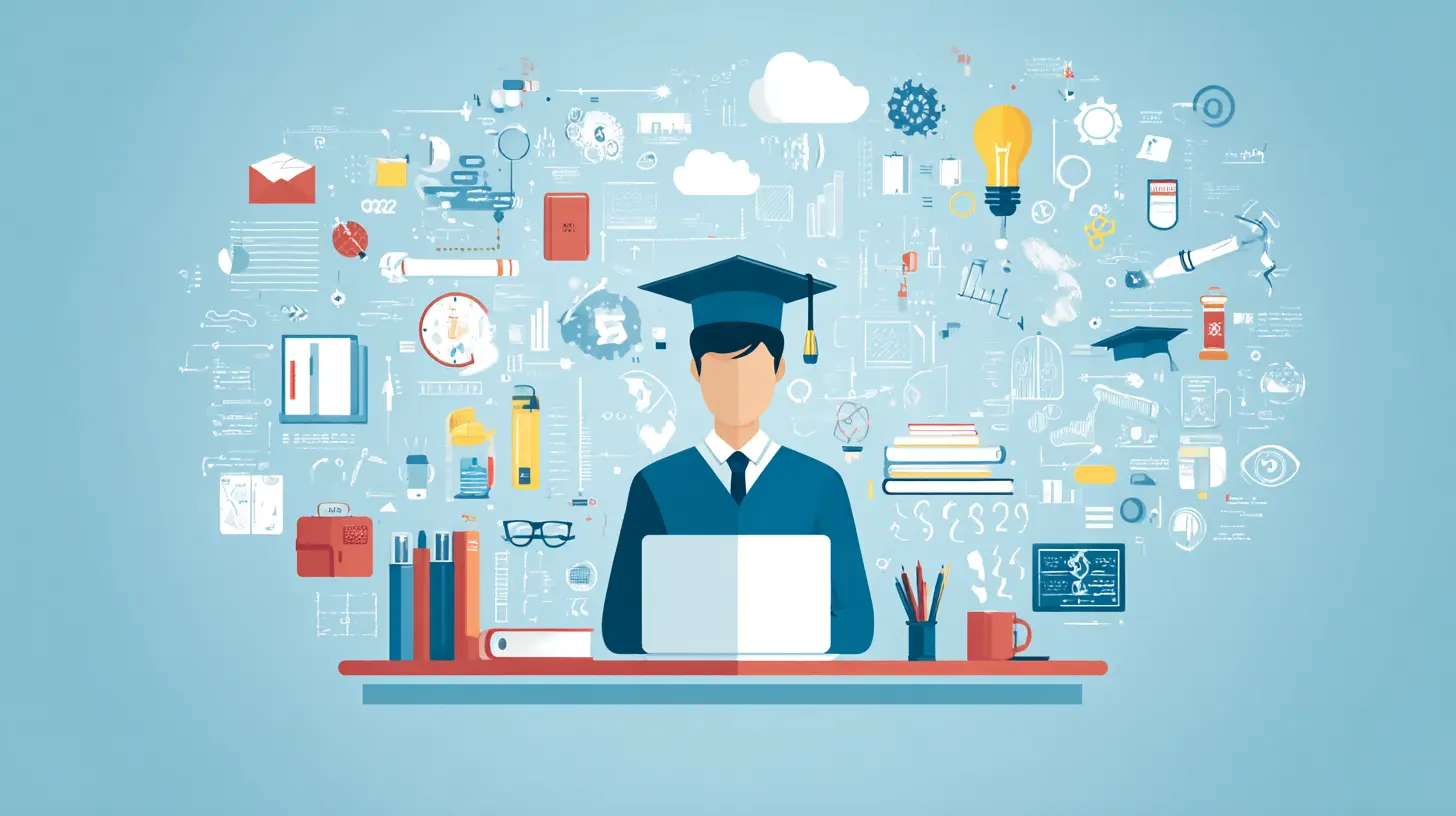
Let me paint you a picture. The old way of changing careers looked like this: you quit your job, move to a new city, take on massive student debt, and spend two years sitting in a lecture hall. If you have a family or a mortgage, that plan is basically a fantasy.The new way? You keep your job. You study at 5 AM with a cup of coffee, or during your lunch break, or after the kids go to bed. You pay as you go, often for a fraction of the cost. You connect with instructors and classmates from around the world. You graduate with a degree that employers actually respect, because by 2026, most hiring managers have taken online courses themselves.
Does that sound more realistic? It is. And it works.
Online Degrees Are Not What You Think
I need to clear something up right now. When I say "online degree," I am not talking about those shady diploma mills that promise a degree in three days. Those were already dying before 2026. What I mean are legitimate programs from accredited universities that happen to be delivered through a screen.Top schools like Arizona State, University of London, Southern New Hampshire University, and dozens of others have poured millions into making their online programs just as rigorous as on-campus ones. The difference? You get recorded lectures you can rewind, interactive projects, live office hours, and peer feedback. It is not a watered-down version. It is a smarter version.

The Three Biggest Hurdles to Changing Careers
Let me walk you through the three walls that usually stop people from switching careers. And then I will show you how online degrees knock each one down.Wall Number One: Time
You have 24 hours in a day. You need to sleep, work, eat, and maybe see your family. Where do you fit in a whole new education? That is the million-dollar question.Online degrees solve this by letting you learn on your own schedule. Most programs are asynchronous, meaning you watch lectures and do assignments when it works for you. Some programs even let you speed up or slow down. Need to finish in 18 months instead of 24? Go ahead. Need to take a break for three months because life got crazy? That is fine too.
I remember talking to a woman named Priya who worked as a bank teller for twelve years. She wanted to become a data analyst. She took one course at a time, studying from 9 PM to midnight after her kids were asleep. It took her two years, but she graduated with zero debt and a job offer before the ceremony.
Wall Number Two: Money
Traditional degrees are expensive. Really expensive. And if you are switching careers, you probably do not have a trust fund waiting for you.Online degrees are generally cheaper. No housing costs, no commuting, no meal plans. Many programs run between five thousand and twenty thousand dollars total, which is a fraction of what you would pay on campus. Plus, because you keep working while you study, you do not lose income. That is a game-changer.
Some employers even pay for your online degree. After 2026, more companies realize that helping employees retrain is cheaper than hiring new people. If you are currently employed, ask your HR department. You might be surprised.
Wall Number Three: Credibility
"I do not think employers will take an online degree seriously."I hear this all the time. And it used to be true. But after 2026, the stigma has mostly evaporated. Why? Because the pandemic forced everyone to learn remotely. Even Ivy League professors taught over Zoom. Hiring managers now understand that online learning requires discipline, not laziness.
Plus, many online degrees now include real-world projects, internships, and portfolio work. You do not just get a piece of paper. You get proof that you can do the job.
Which Careers Are Hot After 2026?
You might be wondering, "Okay, but what should I actually study?" Great question. Let me give you some ideas based on where the world is heading.Healthcare and Wellness
The healthcare industry keeps growing. But I am not talking about becoming a doctor, which takes a decade. Think about roles like health informatics, medical coding, patient advocacy, or mental health counseling. Online degrees in these fields are booming. You can become a certified health coach or a telehealth specialist in under two years.Tech and Data
Yes, tech is still hot. But the entry-level coding bootcamps are losing steam. Companies want people who understand the bigger picture. An online degree in data science, cybersecurity, or user experience design gives you that foundation. Plus, these roles pay well and offer remote work.Sustainability and Green Jobs
After 2026, sustainability is not a niche. It is a necessity. Companies need people who understand renewable energy, sustainable supply chains, and environmental policy. Online degrees in sustainability are popping up everywhere. You can go from an office job to a role that actually helps the planet.Education and Training
Here is a fun one. As online learning grows, we need people to design courses, coach students, and manage virtual classrooms. An online degree in instructional design or educational technology can turn you into the person who builds the next generation of learning experiences.Creative and Digital Arts
The creative economy is exploding. Think video production, animation, digital marketing, and content strategy. Online degrees in these areas teach you practical skills like using editing software, writing for social media, and analyzing audience data. You do not need to move to Hollywood. You can work from anywhere.
How to Pick the Right Online Degree
Not all online degrees are created equal. Here is a simple checklist to avoid wasting your time and money.First, check the accreditation. Only go for programs from regionally accredited institutions. That is the gold standard. If the school is not accredited, your degree might be worthless.
Second, look at the curriculum. Does it teach practical skills or just theory? Read the course descriptions. See if there are projects, case studies, or real-world applications.
Third, read reviews from actual students. Not the testimonials on the school website. Go to Reddit, LinkedIn, or student forums. Ask honest questions.
Fourth, check the support system. Do they offer career counseling? Do they have a job placement office? Do they help you build a network? A good online degree is not just about learning. It is about getting hired.
The Hidden Superpower of Online Degrees
Here is something people rarely talk about. Online degrees teach you how to learn independently. And that skill is more valuable than any specific subject.Think about it. When you finish an online degree, you have proven that you can manage your time, stay motivated without someone hovering over you, and figure things out on your own. Employers love that. It shows initiative. It shows grit. It shows you are not afraid of change.
In a world where jobs keep evolving, the ability to learn new things quickly is your best insurance policy. Online degrees are basically a gym for that muscle.
Real Stories, Real Wins
Let me share a few more stories to show you what is possible.Carlos was a truck driver for fifteen years. He loved the open road but hated being away from his family. He enrolled in an online degree program for supply chain management. Two years later, he got a job as a logistics coordinator. He works from home, earns more money, and sees his kids every night.
Amara was a high school teacher who felt burned out. She loved teaching but hated the bureaucracy. She earned an online degree in instructional design. Now she creates corporate training programs for a tech company. She still teaches, but on her own terms.
James was a retail manager who got laid off when his store closed. He took an online degree in cybersecurity. Within six months of graduating, he had three job offers. He now works in a field that is growing so fast, recruiters call him instead of the other way around.
These are not exceptions. They are the new normal.
Overcoming the Fear of Starting
I know what you might be thinking. "I am too old." "I am not smart enough." "I have been out of school too long."Stop it. Right now.
Age is not a barrier. I have seen people in their fifties and sixties earn online degrees and start whole new careers. Life experience counts for a lot. You already know how to handle pressure, deal with difficult people, and manage your time. Those skills transfer.
As for being out of school, online programs are designed for adults. They assume you have responsibilities. They are not like high school where you sit in a desk for eight hours. You ease into it. You start with one class. You build momentum.
The Financial Math That Works
Let me do some quick math with you. Suppose your current job pays 40,000 dollars a year. You want to switch to a field that pays 65,000 dollars. That is a 25,000 dollar raise.If your online degree costs 15,000 dollars, you pay it off in less than a year. After that, the extra money is yours. Compare that to taking out a 60,000 dollar loan for a traditional degree. You would be paying that off for a decade.
Online degrees are not just cheaper. They are smarter financially.
What About Networking?
People worry about missing the networking opportunities of a physical campus. That is a fair concern. But online programs have adapted.Most good programs have virtual meetups, discussion boards, group projects, and even in-person optional events. You can connect with classmates from different countries. You can join alumni groups on LinkedIn. You can attend virtual career fairs.
Plus, the people you meet in online programs are usually motivated adults, not 18-year-olds who just want to party. The connections you make are often deeper and more professional.
The Future Is Flexible
After 2026, the idea of a "job for life" is dead. Most people will change careers multiple times. The old model of getting one degree in your twenties and coasting until retirement is gone.Online degrees are the perfect tool for this new reality. They are modular, affordable, and accessible. You can stack credentials. Take a certificate first. Then a bachelor's. Then a master's. Each step opens new doors.
You do not have to have everything figured out. You just need to take the first step.
Practical Steps to Start Today
If you are serious about changing careers, here is what you do.First, identify the job you want. Not just the field. The actual job title. Go on LinkedIn and look at people who have that job. What degrees do they have? What skills?
Second, find three online programs that match. Compare costs, lengths, and reviews.
Third, talk to an admissions counselor. Most schools have free advisors who can answer your questions. Do not be shy. They are there to help.
Fourth, enroll in one class. Just one. See how it feels. If you like it, keep going. If not, try a different program.
Fifth, tell someone you trust. Accountability helps. Share your goal with a friend or family member. Ask them to check in on your progress.
Sixth, start before you feel ready. You will never feel ready. That is normal. The courage comes after you begin, not before.
A Final Thought
Changing careers is scary. It feels like jumping off a cliff. But online degrees are like having a parachute that is already packed and waiting for you.The world after 2026 is full of possibility. The old rules about who can do what are gone. You do not need to be young, rich, or lucky. You just need to be willing to learn.
So ask yourself: what would you do if you knew you could not fail? Then go find an online degree that helps you do it.
The door is open. Walk through it.
all images in this post were generated using AI tools
Category:
Online DegreesAuthor:

Fiona McFarlin
Discussion
rate this article
2 comments
Lana McDowney
Online degrees: the flexible magic carpet for career changes after 2026. Who knew learning could be this much fun... and transformative?
June 19, 2026 at 3:20 AM
Fiona McFarlin
Absolutely! Online degrees are redefining how we approach education and career shifts. It's exciting to see so many people embracing this flexible path.
Levi Thomas
Embrace online learning; it opens doors to new career possibilities and growth.
May 11, 2026 at 2:55 AM
Fiona McFarlin
Absolutely! Online learning can be a game changer for career transitions. It offers flexibility and access to diverse opportunities.