How Migration Patterns Have Shaped Nations
7 February 2026
Let’s get one thing straight right from the get-go — if you think nations just popped up fully formed like some instant noodles, you’re in for a wild ride. The truth is, our modern world is a patchwork quilt stitched together by centuries of human migration. Not exactly the map you saw back in middle school, huh?
Migration is like the ultimate remix — people move, mix, clash, create, and repeat. Borders shift, cities bloom, languages blend, and cultures collide (sometimes awkwardly, sometimes beautifully). And voila! You’ve got the world as we know it — shaped, shaken, and stirred by the movement of people across time and space.
So grab your metaphorical backpack (and maybe a snack) because we’re about to unpack how migration patterns have left their fingerprints all over history and continue to sculpt nations today.
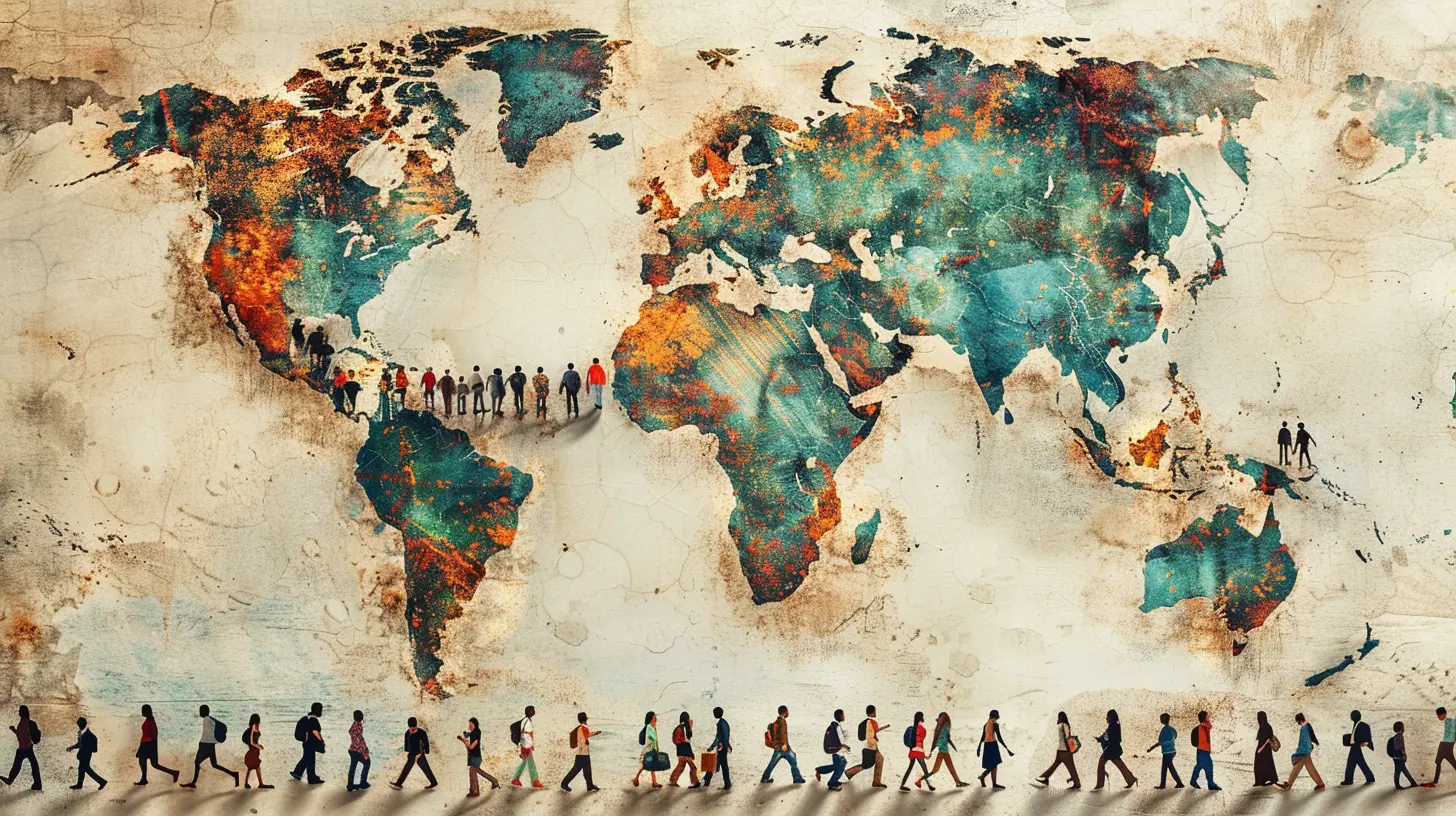
Wait, What Even Is Migration?
Migration is basically what happens when people pack up and say, “Yeah, I’m outta here.” Whether it’s for food, better jobs, safety, adventure, or just because their neighbor wouldn’t stop playing the lute at 3 a.m., people have been moving from one place to another since forever.There are different flavors of migration — internal (within the same country) and international (crossing borders). Then there's voluntary (like chasing that dream job) and involuntary (war, famine, natural disasters — the not-so-fun kind).
Spoiler alert: All types of migration have played a part in shaping nation-states. Imagine trying to untangle spaghetti with a toothpick — that’s how complex it gets. But stick with me — we've got sauce.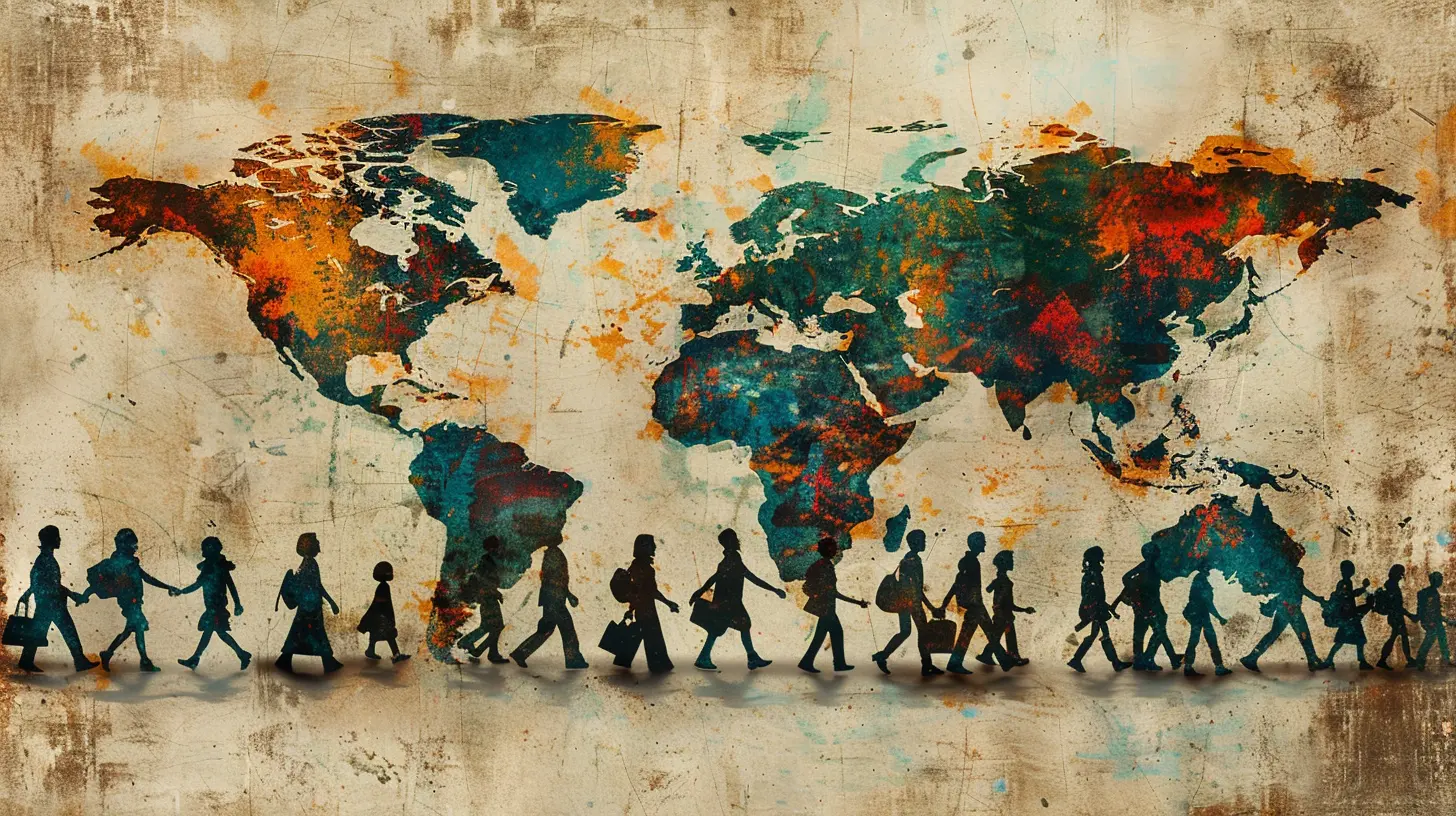
Ancient Times: The Original Travel Bloggers
Long before passports and TSA lines, our ancestors were the OG travelers. First up — early humans out of Africa. Yup, we all kind of started in the same place. Then people wandered off in every direction like it was Black Friday and the world was their shopping mall.Neolithic Shuffle
With agriculture came settlements, and boom — the Neolithic migration began. People spread farming techniques, traded obsidian, maybe a few cooking tips, and bam — early civilizations started popping up.So next time you admire ancient pyramids or rice terraces, thank a migrant farmer.
Empires Love A Good Migration
The Roman Empire? Basically one big multicultural road trip. Rome wasn’t built in a day, and it definitely wasn't built by Romans alone. They absorbed cultures like a sponge — Greeks, Celts, Egyptians, Syrians — the whole gang contributed.And the Mongols? Oh boy. Genghis Khan basically delivered migration with express shipping. That epic sweep across Eurasia tangled languages, religions, and populations faster than you'd say "horseback invasion".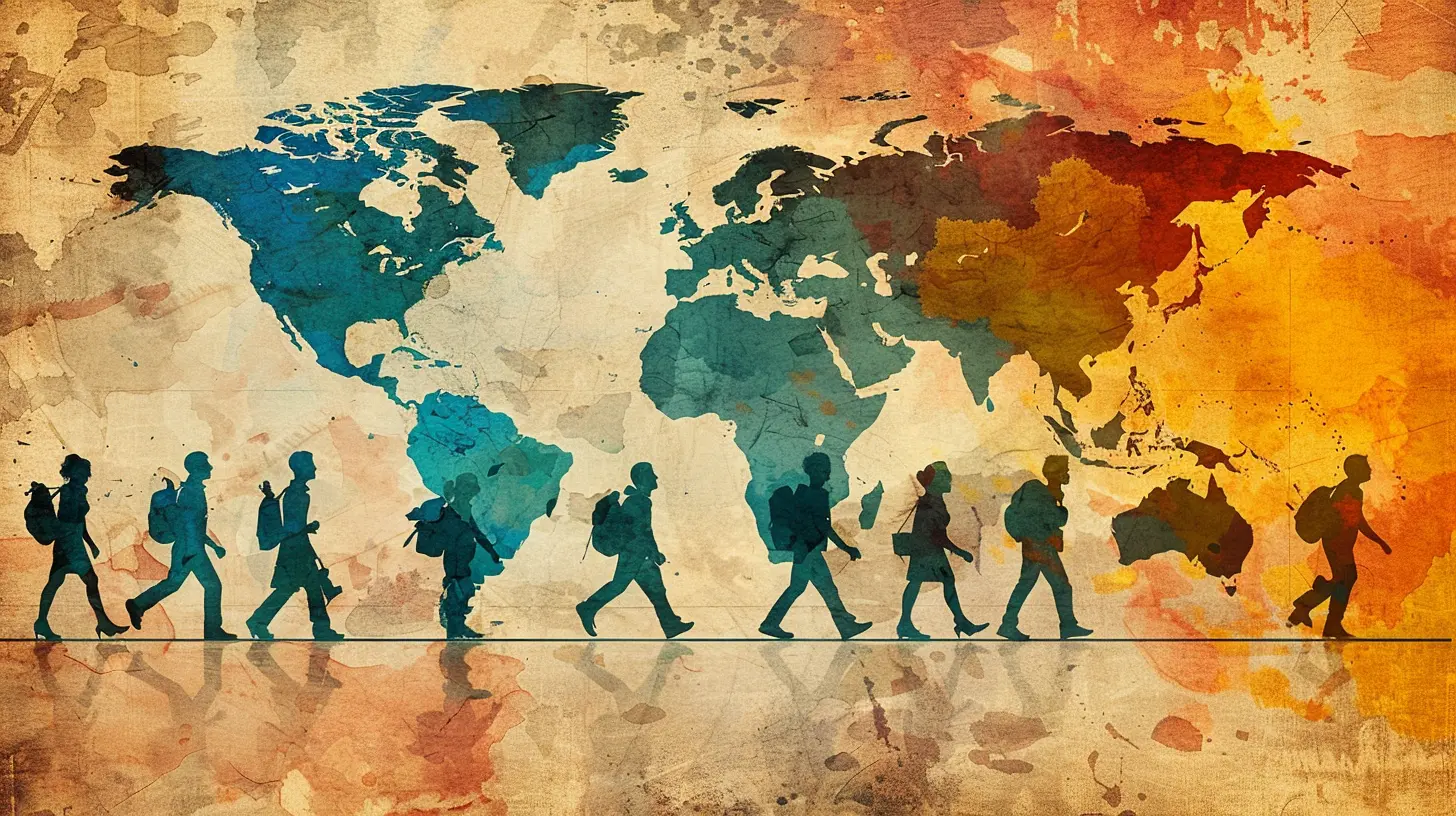
The Age of Exploration: When Europe Started “Visiting”
And by "visiting," I mean showing up uninvited and staying forever. Ahem.Let’s be real — the Age of Exploration was like humanity’s awkward teenage phase. Europeans sailed off to "discover" lands already full of people, and by "discover," I mean... colonize, often brutally. But it did spark massive migration in every direction.
Colonization: The Ultimate Real Estate Grab
The British, Spanish, Portuguese, Dutch, and French packed up their compasses and headed out to plant flags on everything that looked remotely valuable.Migration outcome? Whole continents re-shaped — Native populations displaced (or worse), African people forcibly moved through the transatlantic slave trade, and Europeans setting up camp in the Americas, Africa, Asia, and Oceania.
The result? Modern nations like the U.S., Canada, Brazil, India, South Africa — all crafted through a messy hodgepodge of forced and voluntary migrations.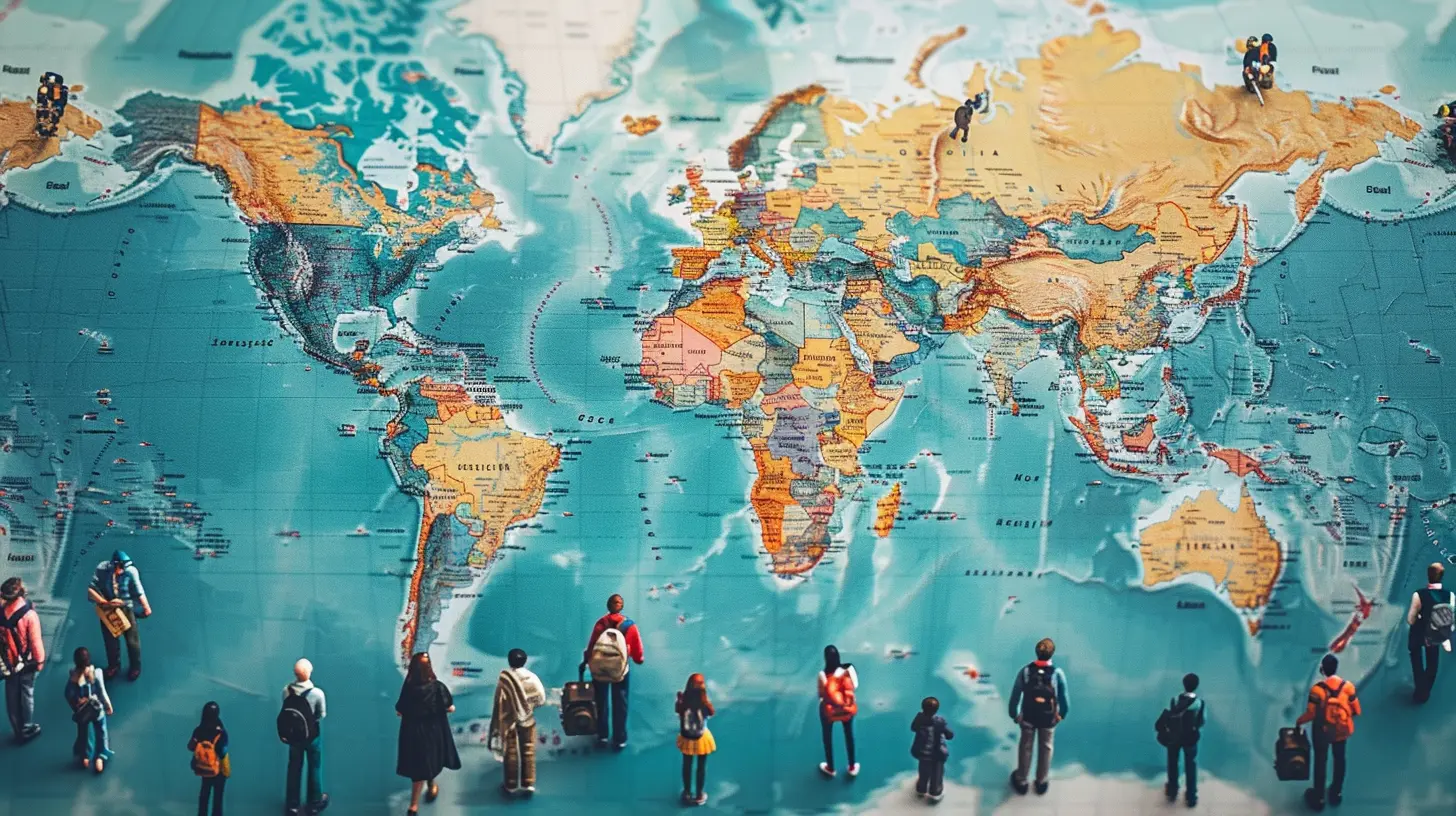
The Industrial Revolution: Bring On The Job Hunters
Fast forward to the 18th and 19th centuries. Steam engines, factories, and smokestacks. Welcome to the Industrial Revolution, where machines took over and cities swelled like overcooked pasta.Urban Migration: Country Mouse Becomes City Mouse
Suddenly, everyone and their uncle was moving from the countryside to cities. London, New York, Berlin — they ballooned with workers chasing paychecks and maybe a day off (if they were lucky).This internal migration altered nations in a big way — class structures shifted, regional accents blended, and that cozy small-town feel? Yeah, it got replaced with smog and overcrowded tenements.
International Waves: The Great Migrations
Massive numbers of people also crossed oceans. Think Irish escaping famine, Italians chasing the American dream, Chinese laborers building railroads, and Eastern Europeans leaving behind persecution.The U.S. became the grand experiment in melting pots (though sometimes more of a pressure cooker). Entire neighborhoods were shaped by who moved there — hello Little Italy, Chinatown, and everything in between.
Wars, Refugees & Redrawing Borders
Let’s talk 20th century. Two World Wars, a Great Depression, the Cold War, and more redrawn borders than your high school map could handle. Migration wasn’t optional for many — it was survival.World Wars = Forced Movement Galore
War has this nasty habit of turning people into refugees. Millions were displaced during both World Wars. Maps were rewritten, new countries were born (looking at you, Eastern Europe), and people had to uproot their entire lives — again.Partition of India: One of History’s Largest Migrations
In 1947, India split into India and Pakistan, and around 15 million people swapped sides based on religion. It was chaotic, tragic, and another example of how political lines turn lives upside down.Post-War Migration Boom
After WWII, labor shortages in Western Europe led to migration programs inviting workers from former colonies. Suddenly, London had Caribbean communities, France had Algerians, and Germany had Turkish guest workers.Spoiler: Many stayed, had kids, and changed the face of these nations forever.
Modern Migrations: Still Movin', Still Shapin'
You’d think with globalization and technology, people would settle down. But nah, migration is still very much a thing — and shaping nations faster than ever.Economic Migration: The Global Career Fair
Today, people move for work, education, or a better quality of life. Tech workers from India move to Silicon Valley. Nurses from the Philippines work in Europe. Students from Africa and Asia study everywhere.This brain exchange (and sometimes brain drain) reshuffles global talent and cultures big time.
Refugees & Climate Migration
Conflict zones like Syria, Afghanistan, and Ukraine? People flee because staying isn’t an option. Add climate change to the mix — rising seas, droughts, and disasters — and you've got new waves of migration shaping borders, politics, and economies.National Identity: Wait, Who Are “We” Again?
All this migration makes you wonder — what exactly is national identity? Is it culture? Language? Skin color? Food preference — like pineapple on pizza?The reality is, nations are fluid entities, constantly evolving. Migration brings new languages, religions, foods, music, and ideas. It challenges the idea of a "pure" national identity (spoiler: that doesn’t exist) and forces us to rethink what being part of a nation truly means.
The Good, The Bad, and The Borderlines
No sugarcoating here — migration has its challenges. Tensions over jobs, housing, integration, xenophobia — these are real and messy issues.But also? Migration has sparked innovation, revitalized aging cities, boosted economies, diversified cultures, and made food way more interesting (tamales for lunch, sushi for dinner? Yes, please).
Nations that embrace migration often end up more resilient, adaptable, and... well, cooler. Just saying.
So, What’s the Big Takeaway?
Migration isn’t just a subplot in human history — it’s the main storyline. From ancient tribes crossing rivers to modern digital nomads hopping time zones with laptops, migration patterns have built, reshaped, and rebooted nations over and over.Borders may try to define who’s “in” or “out,” but people are fluid. Like water, we flow around obstacles, carry culture with us, and eventually leave a mark wherever we land.
So next time you hear someone say, “They’re changing our country,” just smile and reply, “Yep. And they always have. That’s how countries happen.
all images in this post were generated using AI tools
Category:
Social StudiesAuthor:

Fiona McFarlin
Discussion
rate this article
2 comments
Wynter Bishop
What a fascinating exploration of migration's impact on nations! 🌍 Your insights highlight how diverse cultures enrich societies and drive progress. Celebrating the vibrant tapestry of humanity is truly inspiring! Keep sharing such enlightening perspectives! 🎉
February 23, 2026 at 1:07 PM
Fiona McFarlin
Thank you for your kind words! I'm glad you found the discussion on migration's impact inspiring. Celebrating our diverse cultures is essential for progress!
London McTavish
Migration shapes nations profoundly; it’s key to understanding history.
February 7, 2026 at 3:41 AM
Fiona McFarlin
Absolutely! Migration has been a catalyst for cultural exchange, economic development, and demographic shifts, making it essential to understanding the evolution of nations throughout history.