Building a Culture of Innovation in Schools by 2027
10 May 2026
Let's be honest for a second. When you hear the words "innovation in schools," what pops into your head? Maybe it's a room full of 3D printers, a coding boot camp for first graders, or a teacher in a VR headset. That's part of it, sure. But here's the real question: can you actually force a school to be innovative? You can buy all the shiny gadgets in the world, but if the culture isn't ready, those gadgets just gather dust. Innovation isn't a thing you install. It's a mindset you grow.
By 2027, the world outside the school walls will look radically different. We're talking about AI that writes essays, jobs that don't exist yet, and a pace of change that makes your head spin. If our schools are still running on a model from the 19th century-rows of desks, bells, and standardized tests-we're not preparing kids for the future. We're preparing them for a museum. So how do we flip the script? How do we build a culture of innovation that sticks, not just a one-off "Innovation Day" that everyone forgets about by Tuesday?
This isn't about a magic formula. It's about a shift in how we think, lead, and let go. Let's walk through what that actually looks like, from the principal's office to the classroom floor, and how we can make it real by 2027.

The Problem: We Treat Innovation Like a Subject, Not a Culture
Here's the trap most schools fall into. They treat innovation like it's a new elective. "We'll add a robotics club." "We'll buy a few Chromebooks." "We'll have a STEAM fair." That's all fine, but it's like saying you're going to build a healthy family by buying a treadmill and a bag of kale. It misses the point.A culture of innovation isn't about what you have. It's about what you do when no one is looking. It's the permission to fail. It's the teacher who says, "I don't know the answer, let's figure it out together." It's the student who pitches a wild idea and gets a "yes, and..." instead of a "no, because."
The biggest barrier? Fear. Fear of test scores dropping. Fear of parents complaining. Fear of looking stupid. Schools are risk-averse by design. They're built for consistency, not chaos. But innovation is messy. It's a toddler with a crayon on the wall. You can't control it, but you can create a space where it's safe to draw.
Leadership That Eats Its Own Dog Food
If you want a culture of innovation, it starts at the top. And I don't mean the superintendent sending out a memo. I mean the principal walking into a classroom and saying, "I tried that new teaching method yesterday, and it bombed. Here's what I learned."Leaders have to model vulnerability. Think about it. If the principal is afraid to try a new scheduling system because it might fail, why would a teacher risk a new lesson plan? By 2027, school leadership needs to look less like a general and more like a gardener. Your job isn't to command. It's to water the soil, pull the weeds, and let things grow.
This means giving teachers real autonomy. Not just "you can decorate your bulletin board however you want," but "you have the budget and the time to redesign your entire math unit if you think it'll work better." That's scary. It's also the only way to get genuine buy-in.
One practical step: create a "permission slip" for innovation. Not a literal slip, but a clear, written policy that says, "We expect you to try new things. We expect some of them to fail. That's not a mark against you. It's data." When teachers know their job isn't on the line because of a flop, they stop playing it safe.

Rethinking the Physical Space
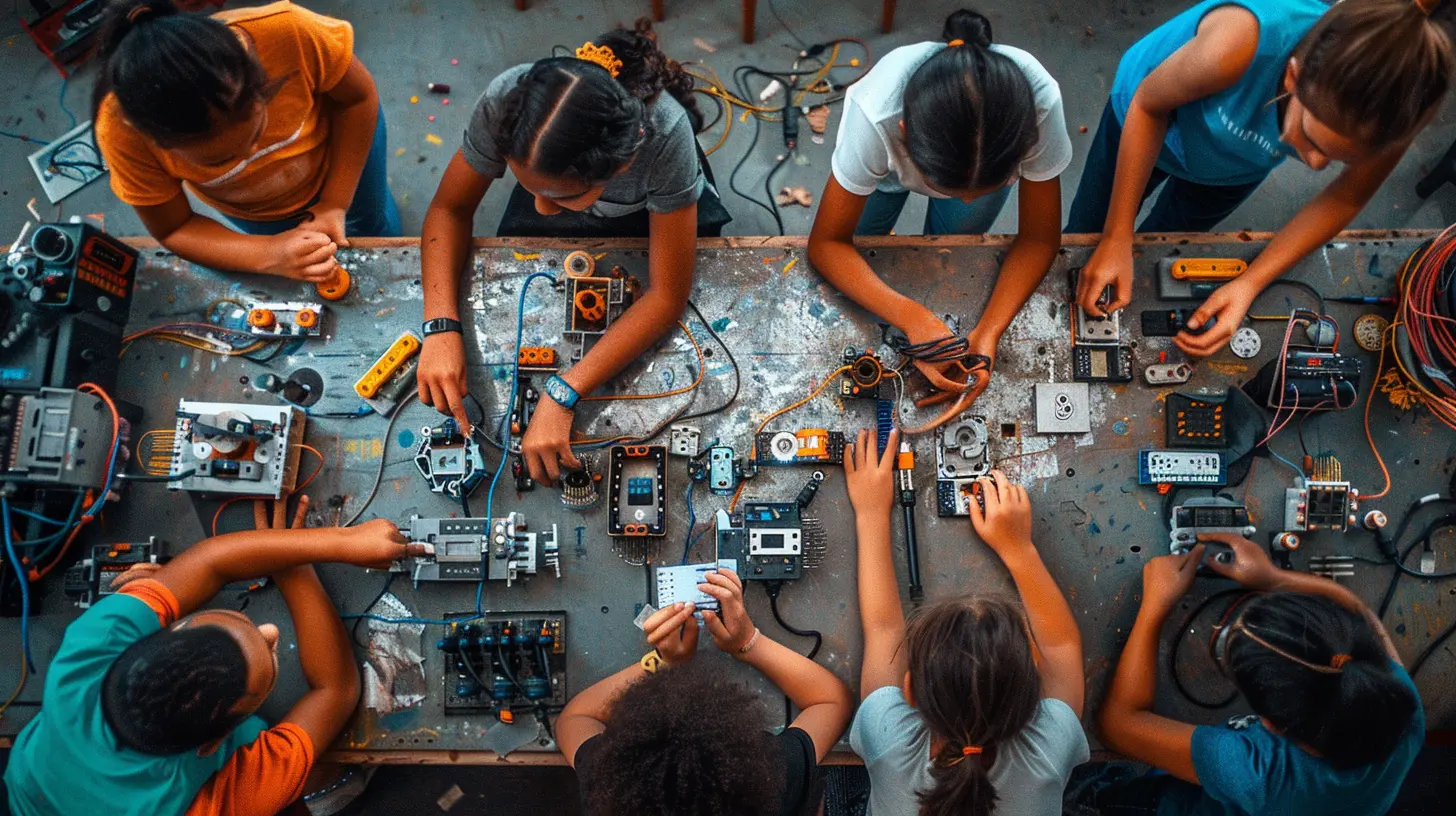
Walk into a typical school. What do you see? Rows. Desks facing forward. A teacher at the front. That layout screams "listen to me and don't move." It's the architecture of compliance.By 2027, we need spaces that say "make something." This doesn't require a million-dollar renovation. It can be as simple as moving furniture around, creating zones for collaboration, quiet work, and prototyping. A library can have a "tinkering corner" with cardboard, tape, and old electronics. A hallway can have a whiteboard wall where students post problems they want to solve.
The physical environment is a silent teacher. If it's rigid, it teaches rigidity. If it's flexible, it teaches adaptability. Let students rearrange the room. Let them build forts out of books. Let the space breathe. You'll be shocked at what happens when you stop treating the classroom like a factory floor.

The Curriculum: Less Coverage, More Curiosity
Here's a hard truth: most curricula are too packed. We try to cover everything and end up teaching nothing deeply. Innovation doesn't come from knowing a little about a lot. It comes from going deep on something that matters.Imagine a social studies class where instead of memorizing dates, students design a solution to a local community problem. Or a science class where instead of following a lab manual, they invent their own experiment to test a hypothesis they care about. That's the shift. From "what do I need to know for the test?" to "what problem do I want to solve?"
Project-based learning isn't new, but it's still not the norm. By 2027, it should be. The key is to make it messy and real. Partner with local businesses, nonprofits, or even the city council. Let students work on actual challenges. A 10th grader who helps redesign a park bench for accessibility isn't just learning engineering. They're learning agency. They're learning that their ideas have weight.
And yes, this means letting go of some content. You won't cover every chapter in the textbook. That's okay. The textbook is a tool, not a bible. The world changes faster than any textbook can keep up. Teaching students how to learn, unlearn, and relearn is the only skill that truly lasts.
The Role of Technology: Tool, Not Teacher
I'm not going to tell you that AI is the enemy, or that every kid needs a laptop. The truth is, technology is a double-edged sword. It can amplify innovation or kill it, depending on how you use it.Too many schools use tech to do the same old things faster. Digital worksheets. Online quizzes. That's not innovation. That's digitizing the past. Real innovation uses tech to do things that weren't possible before. Like a student in rural Montana collaborating in real-time with a class in Nairobi. Or a kid using AI to generate a dozen different story openings, then choosing the best one to revise.
By 2027, we need to stop treating devices as pacifiers and start treating them as launchpads. Teach kids how to ask better questions of AI, how to verify information, and how to use tech to prototype ideas. The goal isn't to make them consumers of tech. It's to make them creators.
One rule of thumb: if a piece of technology replaces the teacher, it's probably bad. If it amplifies the teacher, it's probably good. A tool that helps a teacher give personalized feedback to 30 kids in 10 minutes? That's gold. A tool that puts a kid in front of a screen for six hours? That's a problem.
Assessment: The Elephant in the Room
Let's talk about the thing nobody wants to change: grades. The current system is built on compliance. Do the work, get the points. Innovation is about iteration. Try, fail, revise, try again. Those two worlds are at war.If you want a culture of innovation, you have to change how you measure success. This doesn't mean abolishing grades entirely (though some schools are doing that). It means adding more dimensions. Portfolios. Presentations. Peer reviews. Self-reflection. Things that show process, not just product.
Imagine a student who tries a complex coding project, fails three times, and finally gets it to work on the fourth attempt. Under a traditional system, that's a C at best because they didn't get it right the first time. Under an innovation culture, that's an A+ for persistence and problem-solving. Which one do you want to reward?
By 2027, we need assessments that measure grit, creativity, and collaboration just as much as content knowledge. It's harder to grade. It's also more honest. Life doesn't give you a multiple-choice test. It gives you a problem and says "figure it out." School should do the same.
The Teacher as Lead Learner
Here's a radical idea: stop calling them "teachers." Call them "lead learners." Because that's what they need to be. In an innovation culture, the person at the front of the room isn't the expert who dispenses knowledge. They're the guide who says "I don't know, but let's find out together."This is a huge shift. It requires professional development that actually matters. Not a one-day workshop on "Innovative Teaching Strategies" that everyone sleeps through. But ongoing, embedded coaching. Time for teachers to collaborate, experiment, and reflect. Give them a "sandbox" period each week where they can try new things without pressure.
And pay them like the professionals they are. You can't build a culture of innovation on a shoestring budget and burnt-out staff. It's not just about money-it's about respect. When teachers feel valued, they take risks. When they feel micromanaged, they shut down.
Students as Co-Designers
We talk a lot about student-centered learning, but how often do we actually ask students what they want? Not just "what field trip do you want?" but "what should our school look like?" By 2027, students should have a real seat at the table.Form a student innovation council. Give them a budget. Let them propose changes to the schedule, the lunch menu, the curriculum. You'll get some silly ideas, sure. But you'll also get brilliant ones that adults never thought of. Kids see the world differently. Their constraints are different. Their creativity is raw and unfiltered.
One middle school I know of let students redesign the school's morning routine. They replaced the boring announcements with a student-run podcast. Attendance went up. Engagement went up. Because the kids felt ownership. That's the secret sauce. Innovation isn't something you do to students. It's something you do with them.
Overcoming the Fear of Failure
This is the heart of the whole thing. You cannot have innovation without failure. Period. But our culture-and especially school culture-treats failure like a disease. We punish it. We avoid it. We pretend it doesn't happen.By 2027, we need to normalize failure. Not celebrate it for its own sake, but treat it as a natural part of the process. When a science experiment doesn't work, that's not a waste of time. That's data. When a student's startup idea crashes, that's not a black mark. That's a lesson.
One way to do this: hold "failure fairs." Yes, seriously. Have students present a project that failed and what they learned from it. Give out awards for the "best failure." It sounds silly, but it rewires the brain. It says "we value the attempt, not just the outcome." And that's the foundation of innovation.
The Role of Parents and Community
You can't build this culture in a vacuum. Parents need to be on board. If a kid comes home excited about a project that "failed," and the parent says "why didn't you get an A?" you've got a problem. So schools need to educate parents, too.Hold parent nights where you explain the new approach. Show them examples. Let them experience a hands-on project themselves. When they see the joy and engagement, they'll get it. Most parents want their kids to be creative and resilient. They just don't know how to measure it.
Community partners are also huge. Local businesses, universities, museums, and makerspaces can provide real-world context. A partnership with a tech company can give students access to mentors and tools they'd never have otherwise. It also shows students that what they're learning matters outside the school walls.
A Realistic Timeline: Getting to 2027
We're not going to flip a switch and have a fully innovative school by next September. That's a recipe for burnout. Instead, think of it as a three-year journey.Year One (2024-2025): Start small. Pick one or two pilot programs. Maybe one grade level or one department. Give them permission to experiment. Document everything. Celebrate the wins, analyze the failures. Build a case study.
Year Two (2025-2026): Scale up. Use the lessons from year one to expand to more classrooms. Invest in professional development. Start involving students in decision-making. Revise your assessment policies. Get messy.
Year Three (2026-2027): Embed it. Make innovation part of the school's DNA. Update your mission statement. Align your budget. Make it clear that this is not a trend or a phase. This is how we do school now.
By 2027, it won't be perfect. It will still be messy. But it will be alive. And that's the whole point.
The Bottom Line
Building a culture of innovation in schools isn't about having the latest tech or the fanciest building. It's about shifting from a culture of compliance to a culture of curiosity. It's about giving permission to fail, rewarding risk, and trusting teachers and students to figure things out together.The world is changing fast. By 2027, it will be even faster. The schools that thrive won't be the ones with the best test scores. They'll be the ones that taught kids how to think, adapt, and create. They'll be the ones that built a culture where innovation feels as natural as breathing.
So ask yourself: what's the first small step you can take tomorrow? Not next year. Not after the budget is approved. Tomorrow. Because the future doesn't wait. And neither should we.
all images in this post were generated using AI tools
Category:
School CultureAuthor:

Fiona McFarlin
Discussion
rate this article
2 comments
Kestrel Chavez
This article highlights the crucial need for innovation in education. Fostering a culture where creativity thrives can truly transform learning experiences. By prioritizing collaboration and open-mindedness, schools can empower students and teachers alike to embrace new ideas, ultimately preparing them for the challenges of the future.
June 14, 2026 at 12:46 PM
Fiona McFarlin
Thanks for your insight! I completely agree-innovation is key to transforming education and preparing everyone for the future.
Maren Lozano
I love the idea of fostering innovation in schools! By 2027, we have a chance to create vibrant learning environments where students feel inspired to think outside the box. Let's encourage creativity and collaboration, making education a fun adventure that prepares kids for the challenges of tomorrow.
May 13, 2026 at 3:55 AM
Fiona McFarlin
Thank you! Fostering creativity and collaboration is key to transforming education. Together, we can make learning a truly inspiring adventure for our students.